Colour coding for food safety in the food industry
Prevent cross-contamination with clear colour zones
Colour coding in the food industry is a simple principle with substantial impact: one colour per zone or for a specific application. It prevents, for example, tools used for raw meat from being reused for ready-to-eat products or causing cross-contamination with allergens.
What is colour coding?
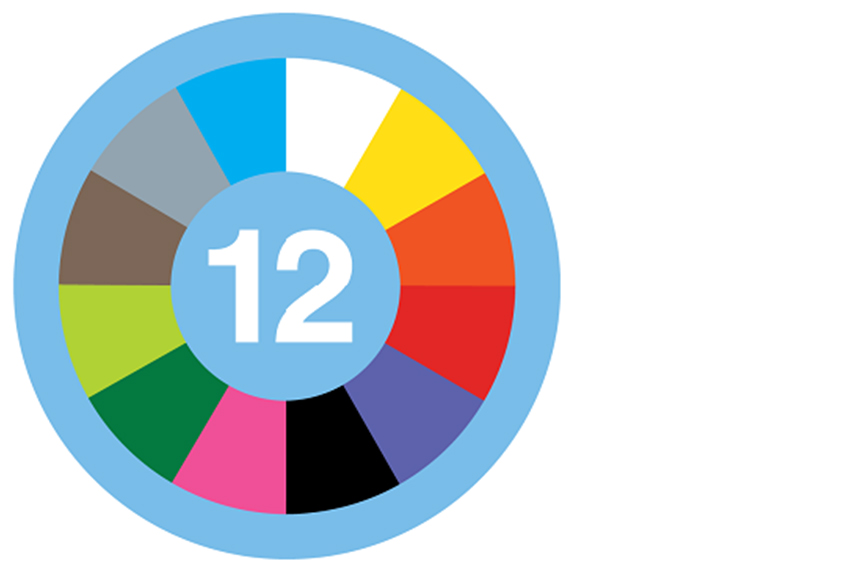
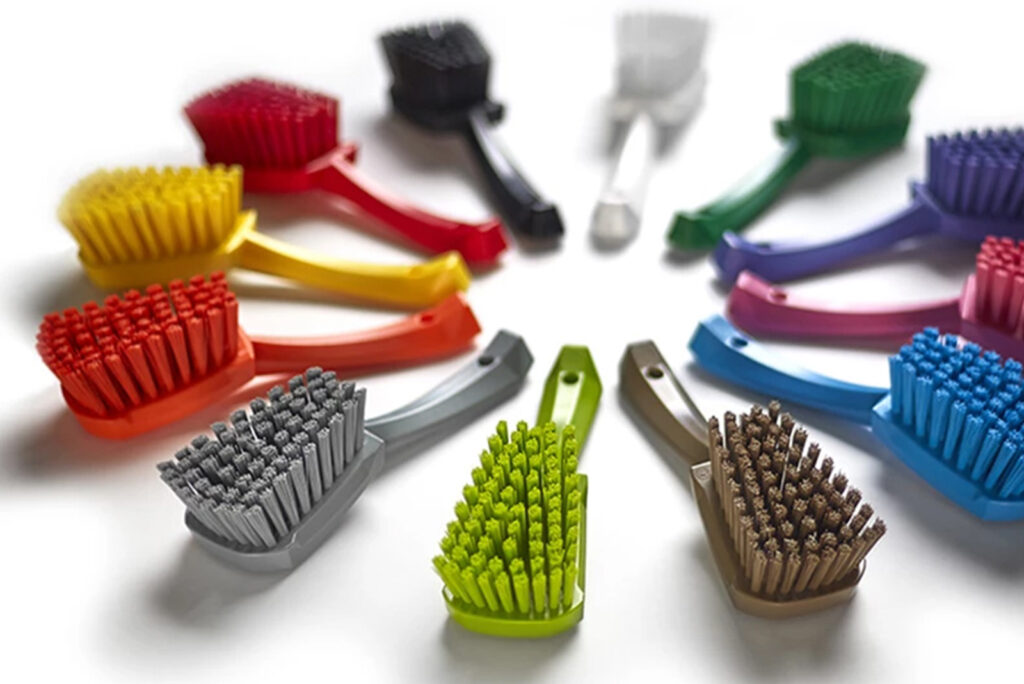
Colour coding is the systematic assignment of fixed colours to materials and products within a production environment. Think of brushes, floor squeegees, buckets, or even work shoes and cleaning cloths.
In many production environments, colour coding is not optional but an integral part of hygiene and food safety measures. Within HACCP systems and international standards such as BRCGS, IFS and FSSC 22000, colour coding is recognised as an effective tool to control cross-contamination and reduce overall risk. During audits, companies should therefore be able to explain how and why colour-coded materials are organised.
The objective is straightforward: materials remain within their assigned zone and are not transferred between hygiene levels. This reduces the chance that tools from a “dirty” area end up in a clean production area and lowers the risk of cross-contamination.
Start with risks, not colours
An effective colour coding system does not start with choosing colours, but with identifying the risks within the production process. This includes analysing product flows, the presence of allergens, different hygiene zones and critical process steps.
Only when these risks are clearly defined can it be determined where visual separation is required. For example, a separate colour can be assigned to allergen-related activities. A distinction can also be made between food contact and non-food contact, or colour coding can be applied per zone or production line to prevent mixing.
By basing colour choices on a risk analysis, the system aligns better with HACCP and avoids unnecessary complexity.
Colour coding helps prevent cross-contamination and supports clear separation of allergen-related activities. Because materials are visually distinguishable, control on the production floor becomes easier and more consistent. This contributes not only to maintaining hygiene standards, but also to protecting overall product integrity.

Why colour coding works in practice
Colour coding not only supports more hygienic and food-safe working practices but also helps organise daily tasks on the production floor. By visually distinguishing materials, it is immediately clear which tools belong where and for what purpose. Misunderstandings become highly unlikely and are quickly identified.
This significantly reduces the risk of errors, especially in busy environments or during shift changes. At the same time, colour coding ensures faster recognition of materials, reduces misunderstandings between employees, and contributes to a cleaner, more organised workplace.
Because this control measure is visible and easy to verify, it also contributes to a positive audit outcome. Precisely because colour coding is visual and language-independent, it remains effective in international teams or when working with temporary staff.
Where colour coding is mainly applied
Colour coding is particularly important for companies with strict hygiene requirements and zone separation, such as:
- Food producers and processors in open product environments
- Meat, fish and dairy companies where zone separation is essential
- Cheese producers and dairy processors with separate hygiene zones for ripening, processing and packaging
- Bakeries and ingredient suppliers with multiple product flows
- Organisations working with allergens or product segregation
- Export-oriented companies with audit requirements (BRCGS, IFS)
Commonly used colour zones
There is no fixed global standard for colour zones. However, in practice many companies use similar colour choices. In the food industry, blue is commonly used in production areas and food processing. Blue is highly visible and rarely occurs naturally in food.
Yellow is often used for floors and non-food contact surfaces. Red is sometimes reserved for sanitary areas or high-risk applications, while green is commonly used in general or low-risk zones.
More important than the colour itself is the application and execution: choose a system that is logically structured internally. Document the procedure, apply it consistently and monitor compliance. This makes colour coding an effective tool for safeguarding hygiene and food safety.
From agreement to workable system
A colour coding system only works when it is applied and maintained consistently. In practice, problems often arise when too many colours are used, employees are insufficiently trained or materials look too similar.
A workable system therefore requires a limited and logical number of colours, sufficient contrast with products and surroundings, and a clear combination of colour coding with fixed storage locations and visual markings. In addition, it is important to train employees and document agreements in procedures, so everyone knows the rules.
Damaged or discoloured materials must be replaced in time to avoid confusion. By treating colour coding as part of the daily work process, the system remains effective and is not reduced to a one-off audit measure that is abandoned under time pressure.
Popular brands for colour coding
Popular colour-coded products
How do you ensure colour coding is applied correctly?
Colour coding only works if it is not treated as a voluntary guideline. A common issue is that materials are “quickly borrowed” for use in another area. The following steps help prevent this:
- Map hygiene zones (low-care, high-care, allergens)
- Assign fixed colours per zone and document them
- Use dedicated cleaning materials per area
- Provide separate storage and clear markings
- Train employees (including temporary staff and cleaners)
- Monitor compliance through internal audits or inspections
- Record deviations and corrective actions
Colour coding and allergen control
In allergen production, colour coding provides an additional barrier. A dedicated colour for allergen lines prevents brushes, gloves or clothing from being unintentionally shared with allergen-free production.
Many allergen incidents do not stem from major system failures, but from small practical lapses on the production floor — such as shared tools or unclear storage.
Colour coding as a system
Colour coding is not a goal, but a tool to support hygienic and controlled working practices. When properly designed and consistently applied, it contributes to food safety, process control and confidence during audits.
The real value becomes visible in daily operations when materials stay in their designated zones. Colour coding works best when it is fully integrated into daily operations and aligned with the specific risks of the organisation.
In many food companies, colour coding is therefore applied as part of 5S and visual management, where fixed locations, clear storage and discipline ensure long-term effectiveness.
Audit: what does an auditor want to see?
During audits (including BRCGS and IFS), colour coding is often viewed as a practical control measure. An auditor mainly wants to see:
- Defined zones and corresponding colour schemes
- How employees are informed (instruction and training)
- Where materials are stored (zone-based storage)
- That selected materials are suitable (specifications)
- That monitoring takes place (records and inspections)
A good colour coding system is therefore not only visible, but also easy to explain.
Advice from a PPE specialist
Is your colour coding system robust and audit-ready? Our PPE specialists advise companies in the food industry, catering and logistics daily regarding colour zones, suitable hygiene tools and PPE.
Contact us for personal advice or a non-binding quotation via email (info@safetyproducts.com) or by phone at +31 (0)314 757 300.
You might also like

EN 14404:2024 updated standard for knee protection
What does this mean in practice? In many professions, knee protection is essential, especially where prolonged kneeling...

New rules for allergen labelling from January 2026
Allergen warnings must be better substantiated From 1 January 2026, new rules for allergen labelling will come into forc...

Allergen Management in the Food Industry
Managing allergens in daily food production Allergens are a distinct risk within food safety. Unlike microbial risks, ev...

FSSC 22000 Certification
The globally recognised standard for food safety management FSSC 22000 (Food Safety System Certification) supports organ...
Detectable versus Non-Detectable
Why are detectable products relevant in production environments? On a production line, a broken pen or a lost plaster ca...

African Swine Fever (ASF): Reducing the Risk of Infection
The Human Factor Makes Farms Vulnerable – Hygiene and PPE Are Critical for Prevention African Swine Fever (ASF) contin...
Avian Influenza H5N1: Risks, Prevention and PPE
Practical Hygiene and PPE Measures for Work Involving Poultry Avian influenza, including the H5N1 virus, is a recurring...

IFS Food: International Standard for Food Safety
IFS Food and the Requirement for Waterproof Plasters IFS Food is one of the most widely recognized food safety standards...
Nitrile gloves – food grade
High-quality disposable nitrile gloves Disposable blue nitrile gloves are nowadays the standard in the food industry, th...
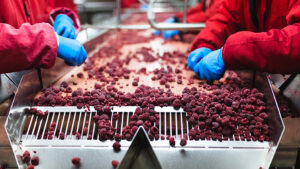
Why Blue Is Commonly Used in Food Production Environments
Visibility and Detectability of Blue Products in Food Processing In food production, colour is not a design choice. It s...

Safe Use of Disposables and PPE in the Cheese Industry
Essential Guidelines for Hygiene and Food Safety in Cheese Production Cheese production takes place in an environment wh...

The 5S Lean Method: Structure and Organization on the Shop Floor
Workplace organization as the foundation for safe and efficient operations Order and organization on the shop floor requ...