Safe Use of Disposables and PPE in the Cheese Industry
Essential Guidelines for Hygiene and Food Safety in Cheese Production
Cheese production takes place in an environment where hygiene cannot fail. Microbiological risks, physical contamination and cross-contamination are constant concerns.
For that reason, the correct use of food-grade disposables and personal protective equipment (PPE) is a fixed point of attention in dairy processing.

Disposables and PPE in Cheese Production
In cheese production, disposables are worn once and discarded to prevent contamination during processing. Typical examples include:
- Hairnets
- Beard covers
- Disposable gloves
- Body protection
- Disposable aprons
- Overshoes
- Sleeve protectors
- Visitor coats
- Detectable plasters
Personal Protective Equipment in Cheese Production
PPE worn during cheese production protects employees against the risks present in the process. This includes:
- Foot protection
- Hand protection
- Eye and face protection
- Hearing protection
- Chemical-resistant protection where cleaning agents are used
Milk and cheese are sensitive products and can easily support bacterial growth, including Listeria monocytogenes. Physical contamination such as hair, fragments of clothing, plastic or metal particles can also seriously affect product quality, food safety and consumer health.
Standards in the food industry, such as BRCGS Food Safety, IFS and HACCP, set clear requirements for the use of PPE and disposables in dairy production environments. Regulatory authorities also emphasise strict hygiene control and contamination prevention within food production facilities.
Who Is This Relevant For?
Proper use of disposables and PPE is relevant for cheese manufacturers and dairy processors, companies that grate, slice or repackage cheese, private label producers and exporters, as well as logistics and packaging companies handling cheese or dairy products.
The same requirements apply to temporary workers, visitors, cleaning teams and maintenance staff entering production or hygiene zones.
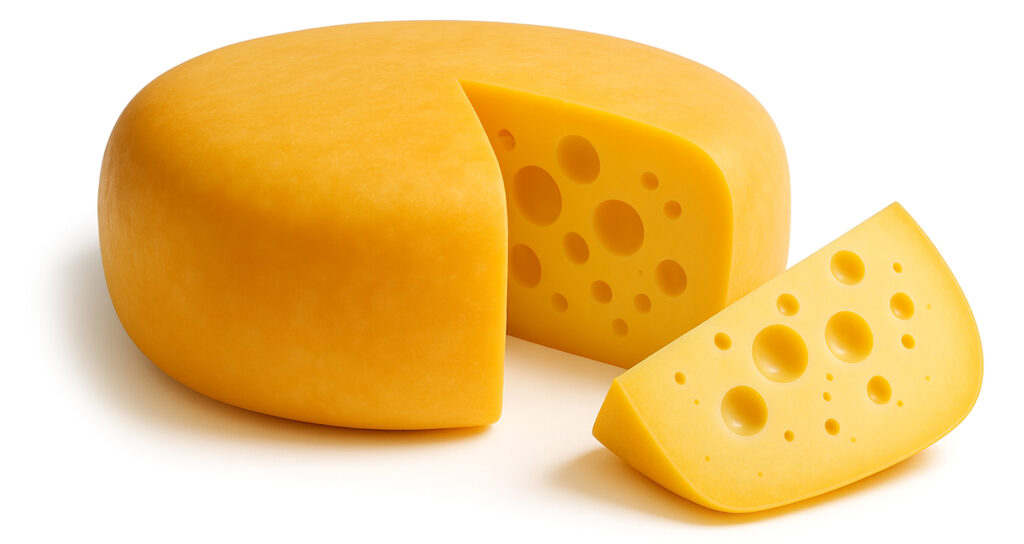
Occupational Safety in the Cheese Industry
In addition to hygiene, worker safety also requires attention. Cheese production involves machinery, knives, wet floors and cleaning chemicals, each presenting specific risks.
Cut injuries remain one of the most common workplace incidents in food processing. They may occur during machine operation, blade changes, sharpening or cleaning, during manual slicing, while opening packaging or through contact with sharp edges on equipment and structures.
Cut-resistant gloves matched to the level of risk, food-contact compliance and proper training in use and replacement help reduce these incidents.
Opening packaging is another frequent risk moment. Detectable safety knives reduce the likelihood of injuries and limit contamination risks in case of breakage or lost components. These knives are suitable for environments using metal detection or X-ray inspection systems.
Slipping hazards are common due to cheese dust, grated cheese, brine, moisture and cleaning agents. Safety footwear with slip-resistant soles is essential. On-site slip testing can help determine where additional protection is required and which sole type performs best. In extremely slippery environments, specialised anti-slip solutions may be necessary.
Head injuries can occur through contact with pipes, machinery, low installations or as a result of slipping and falling. Bump caps provide a practical and comfortable solution in low-clearance areas, technical zones and during maintenance or cleaning activities.
Foundations for Safe Use
Safe and compliant use of disposables and PPE in cheese production rests on three pillars: hygiene and food safety, quality management and documentation, and product integrity and traceability.
1. Hygiene management focuses on preventing microbiological contamination through strict personal hygiene rules, correct use of disposable PPE and clear glove and clothing change procedures. Colour coding per zone, such as raw milk areas, brining rooms, ripening areas and packaging departments, helps avoid cross-contamination.
2. Quality management requires documented procedures for PPE use, behaviour and clothing rules aligned with HACCP risks, ongoing supervision by quality departments and regular audits or inspections to verify compliance.
3. Product integrity means preventing foreign materials from entering cheese products. This includes the use of blue, visually distinctive, food-grade disposables and, where required, metal- or X-ray-detectable plasters and gloves. Incident reporting and deviation records remain essential parts of this system.
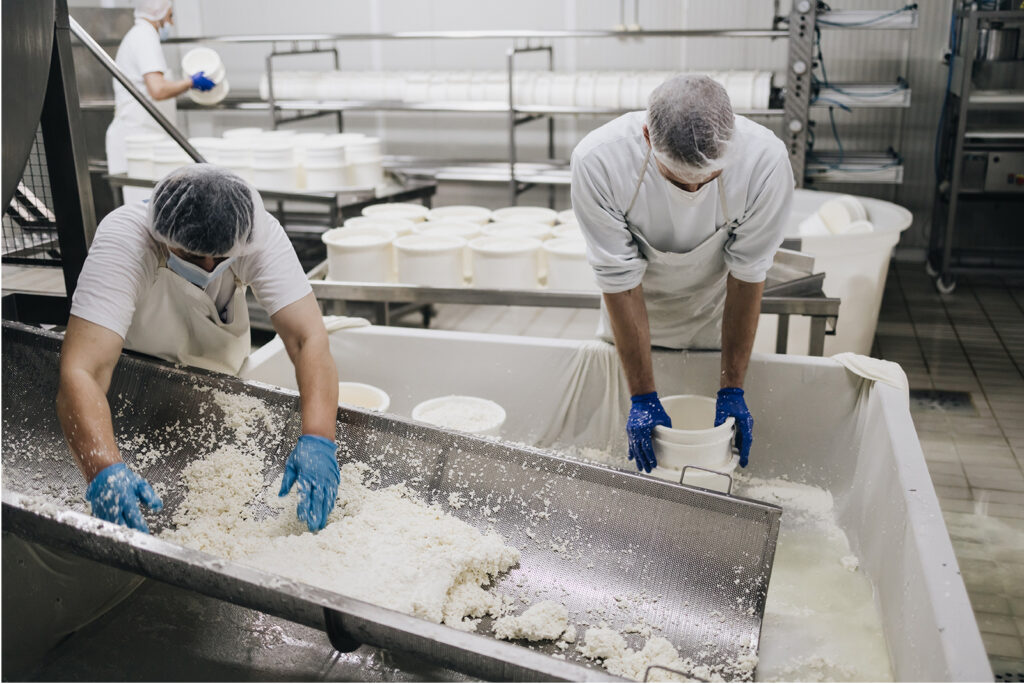
Why Disposables Matter in Cheese Production
Cheese production often takes place in warm, humid and salt-sensitive environments. These conditions support bacterial growth. A torn glove or an uncovered beard may already be enough to introduce contamination. Disposables help reduce these risks directly.
Physical contamination is another concern, particularly in packaging and ripening departments. Blue, highly visible and, where necessary, detectable products make it easier to identify foreign materials. Many producers now choose detectable solutions such as gloves, writing instruments and tools because customers and certification standards place increasing emphasis on product integrity and recall prevention.
How to Implement Safe Use in Practice
Begin with a current HACCP risk assessment in which hygiene rules and PPE requirements are clearly defined. Based on this assessment, establish clear clothing policies, often supported by colour coding per hygiene zone.
Train employees in correct use and timely replacement of disposables. Use only food-grade materials that meet legal and customer requirements. Maintain records of PPE distribution, incidents and deviations to support audits and quality control. Regular internal inspections help keep standards consistent.
In departments equipped with metal detection or X-ray inspection, detectable products add an extra layer of protection. A properly organised system makes audits easier and strengthens both internal and external verification processes.
Popular Products for Cheese Production

Advice from a PPE Specialist
Working safely in the cheese industry requires more than selecting the right products. Warm, humid conditions, open product flows and strict hygiene standards demand careful selection and correct use of disposables and PPE. This includes choosing the right glove type per process step, defining replacement intervals, applying colour coding per zone and using detectable products where necessary.
Our PPE specialists advise cheese producers and dairy processors daily on food-grade disposables and personal protective equipment aligned with HACCP risk assessments, BRCGS and IFS requirements and practical shop floor conditions. This helps reduce microbiological and physical risks and ensures organisations are well prepared for audits.
Email us at info@safetyproducts.com or call +31 (0)314 757 300.
You might also like

EN 14404:2024 updated standard for knee protection
What does this mean in practice? In many professions, knee protection is essential, especially where prolonged kneeling...

New rules for allergen labelling from January 2026
Allergen warnings must be better substantiated From 1 January 2026, new rules for allergen labelling will come into forc...

Allergen Management in the Food Industry
Managing allergens in daily food production Allergens are a distinct risk within food safety. Unlike microbial risks, ev...

FSSC 22000 Certification
The globally recognised standard for food safety management FSSC 22000 (Food Safety System Certification) supports organ...
Detectable versus Non-Detectable
Why are detectable products relevant in production environments? On a production line, a broken pen or a lost plaster ca...

African Swine Fever (ASF): Reducing the Risk of Infection
The Human Factor Makes Farms Vulnerable – Hygiene and PPE Are Critical for Prevention African Swine Fever (ASF) contin...
Avian Influenza H5N1: Risks, Prevention and PPE
Practical Hygiene and PPE Measures for Work Involving Poultry Avian influenza, including the H5N1 virus, is a recurring...

IFS Food: International Standard for Food Safety
IFS Food and the Requirement for Waterproof Plasters IFS Food is one of the most widely recognized food safety standards...

Nitrile gloves – food grade
High-quality disposable nitrile gloves Disposable blue nitrile gloves are nowadays the standard in the food industry, th...

Colour coding for food safety in the food industry
Prevent cross-contamination with clear colour zones Colour coding in the food industry is a simple principle with substa...
Why Blue Is Commonly Used in Food Production Environments
Visibility and Detectability of Blue Products in Food Processing In food production, colour is not a design choice. It s...

The 5S Lean Method: Structure and Organization on the Shop Floor
Workplace organization as the foundation for safe and efficient operations Order and organization on the shop floor requ...