The 5S Lean Method: Structure and Organization on the Shop Floor
Workplace organization as the foundation for safe and efficient operations
Order and organization on the shop floor require deliberate choices in layout, storage and daily routines. The 5S Lean method is a systematic approach to workplace organization, in which materials are assigned fixed locations and are often stored using colour coding.
As a result, deviations in layout, storage or PPE use become immediately apparent. The relationship between structure, colour coding and hygiene is essential for safe operations.
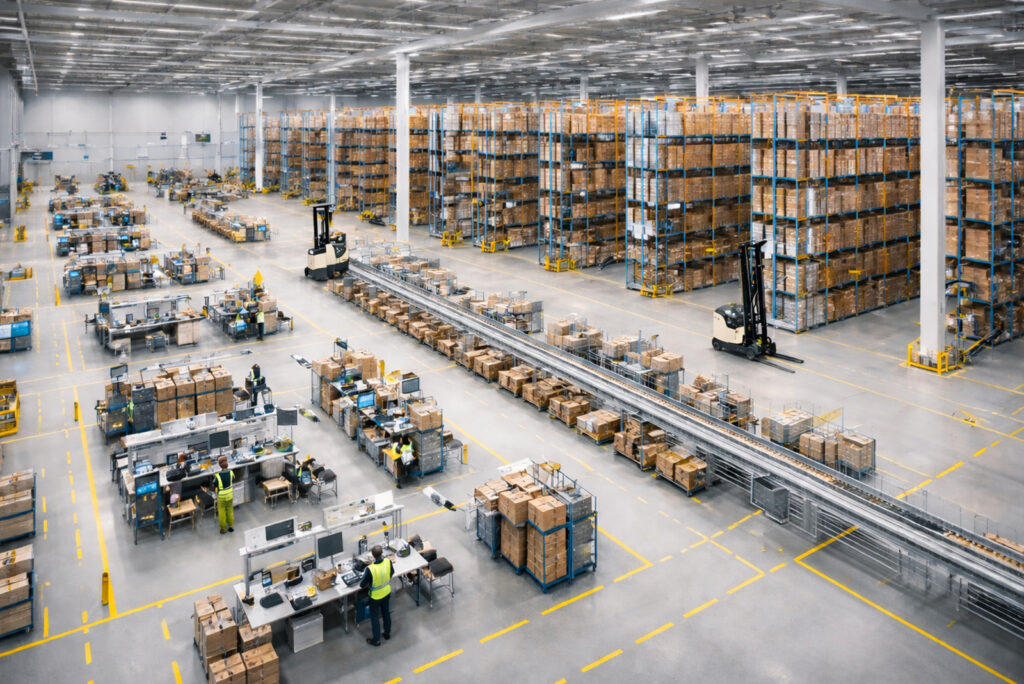
5S as the Foundation for Structured Working
The 5S method is a structured way of working used in production, logistics and services to organize workplaces in a clear and manageable way.
The method became widely known through Lean and the Toyota Production System (TPS), where order, discipline and early detection of deviations form the foundation. Originally developed in Japan and often mentioned in the context of Lean manufacturing, 5S focuses on creating and maintaining order, clarity and discipline on the shop floor.
In practice, 5S serves as the starting point for structured working and is typically the first step toward greater control over processes and workplace layout — not as a standalone goal, but as a tool to keep processes manageable, prevent errors and detect deviations earlier.
What is the 5S Method?
The name 5S refers to five Japanese terms that each describe a step in workplace organization:
- Seiri (Sort)
- Seiton (Set in order)
- Seiso (Shine)
- Seiketsu (Standardize)
- Shitsuke (Sustain)
Together, these steps form a framework for organizing workplaces in a clear, safe and predictable way. The method is applied in various sectors, from industry and logistics to food production and services.
Start with Structure, Not with Tools
An effective 5S implementation does not begin with signs, labels or markings, but with critically assessing the workplace and the process. Which materials are required? What belongs where? Which items cause disruption, delays or risks?
5S only adds value when this foundation is clearly defined. Without this analysis, 5S is quickly perceived as “tidying up for the audit,” after which the old situation soon returns.
The 5S Steps in Practice
5S consists of five interconnected steps that reinforce each other and together ensure structure and organization on the shop floor.
- Seiri: Sort
Only materials, tools and equipment that are actually needed remain at the workplace. Unnecessary items are removed. This reduces time spent searching, obstacles and ambiguity. - Seiton: Set in order
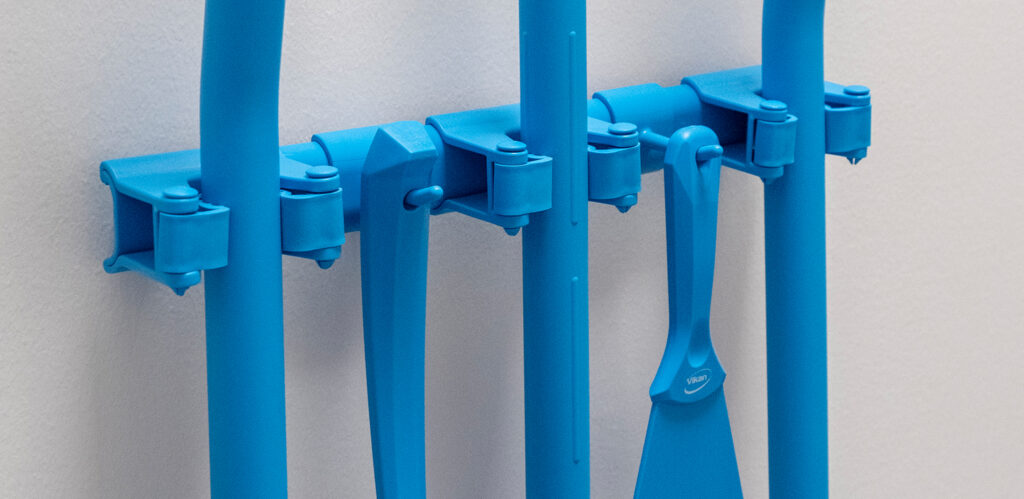
Everything is assigned a fixed location. Materials are logically arranged so it is immediately visible what belongs where. This makes deviations easier to detect and limits unnecessary movement. - Seiso: Shine
Cleaning becomes part of the work process, not only maintenance. During cleaning, wear, leaks or defects also become visible. - Seiketsu: Standardize
Agreements regarding layout, storage and working methods are documented. This ensures that everyone works in the same way, regardless of shift, department or experience. - Shitsuke: Sustain
Shitsuke is often the most difficult step, as it depends on daily discipline and consistency. 5S only works when agreements are followed and become part of the daily routine. Training, repetition and leading by example play an important role here.
5S in Relation to HACCP and Hygiene Management
In sectors with strict hygiene requirements, such as the food industry, 5S is often applied in conjunction with systems such as HACCP and GMP.
By assigning fixed locations and clear zones to materials, tools and PPE, the risk of cross-contamination and allergen transfer is reduced. Deviations, such as incorrectly stored tools or unwanted materials in production areas, are noticed more quickly and can be corrected immediately. As a result, 5S contributes to both operational efficiency and practical control of food safety risks.
5S Is Not a Standard, but It Is Efficient and Practical
Good workplace organization contributes to safety, even though 5S itself is not a safety standard. A structured workplace makes practical risks easier to identify, such as blocked walkways, misplaced materials or leaks. Unknown or misplaced tools can therefore be identified earlier, allowing corrective measures to be taken promptly.
In the context of occupational safety, this is often referred to as housekeeping: basic measures that help reduce incidents and unsafe situations.
Popular Products for 5S Workplace Organization
Visual Management and Colour Coding within 5S Lean
Within 5S, visual tools such as markings, labels and the use of colour are frequently applied. This falls under visual management: information must be clear at a glance.
Colour coding is a powerful instrument within 5S Lean and workplace organization. Applying fixed colour codes to tools, zones and storage locations ensures immediate recognition and prevents mix-ups.
In sectors with hygiene requirements colour coding supports:
- Zone separation
- Tool recognition
- Prevention of mix-ups
- Control of physical contamination
Visual tools must be based on clear agreements and documented risk analysis. Without this foundation, they quickly lose effectiveness.
When Does 5S Truly Work?
5S works effectively only when the workplace layout aligns with daily work and employees understand why agreements exist. Standards must not only be documented, but actively maintained, so that deviations remain open for discussion and are actually addressed.
At the same time, an effective 5S system requires flexibility: it must adapt to changes in processes, people and circumstances. Without this safeguarding, 5S loses its value and becomes a temporary action rather than a structural way of working.
5S as an Organizational Method within Lean
The 5S method is not a certification and not a legal obligation. It is an organizational method often used as the foundation for broader quality and improvement programs, such as Lean or continuous improvement.
The practical implementation differs per organization and sector. What works in a production environment requires a different approach than in logistics or services.
Advice from a PPE and Hygiene Specialist
Are you unsure how 5S Lean, workplace organization, colour coding or visual management can be practically applied within your organization? Our specialists advise companies in industry, logistics and food processing every day on structure, hygiene and safe workplace design.
Feel free to contact us at info@safetyproducts.com or call +31 (0)314 757 300.
You might also like

EN 14404:2024 updated standard for knee protection
What does this mean in practice? In many professions, knee protection is essential, especially where prolonged kneeling...

New rules for allergen labelling from January 2026
Allergen warnings must be better substantiated From 1 January 2026, new rules for allergen labelling will come into forc...

Allergen Management in the Food Industry
Managing allergens in daily food production Allergens are a distinct risk within food safety. Unlike microbial risks, ev...
FSSC 22000 Certification
The globally recognised standard for food safety management FSSC 22000 (Food Safety System Certification) supports organ...
Detectable versus Non-Detectable
Why are detectable products relevant in production environments? On a production line, a broken pen or a lost plaster ca...

African Swine Fever (ASF): Reducing the Risk of Infection
The Human Factor Makes Farms Vulnerable – Hygiene and PPE Are Critical for Prevention African Swine Fever (ASF) contin...
Avian Influenza H5N1: Risks, Prevention and PPE
Practical Hygiene and PPE Measures for Work Involving Poultry Avian influenza, including the H5N1 virus, is a recurring...

IFS Food: International Standard for Food Safety
IFS Food and the Requirement for Waterproof Plasters IFS Food is one of the most widely recognized food safety standards...
Nitrile gloves – food grade
High-quality disposable nitrile gloves Disposable blue nitrile gloves are nowadays the standard in the food industry, th...

Colour coding for food safety in the food industry
Prevent cross-contamination with clear colour zones Colour coding in the food industry is a simple principle with substa...
Why Blue Is Commonly Used in Food Production Environments
Visibility and Detectability of Blue Products in Food Processing In food production, colour is not a design choice. It s...

Safe Use of Disposables and PPE in the Cheese Industry
Essential Guidelines for Hygiene and Food Safety in Cheese Production Cheese production takes place in an environment wh...