Why Blue Is Commonly Used in Food Production Environments
Visibility and Detectability of Blue Products in Food Processing
In food production, colour is not a design choice. It serves a practical purpose. Blue is widely used for gloves, plasters, disposable items and hygiene tools because it stands out clearly against almost all natural food products. That contrast makes unwanted fragments easier to detect during production.
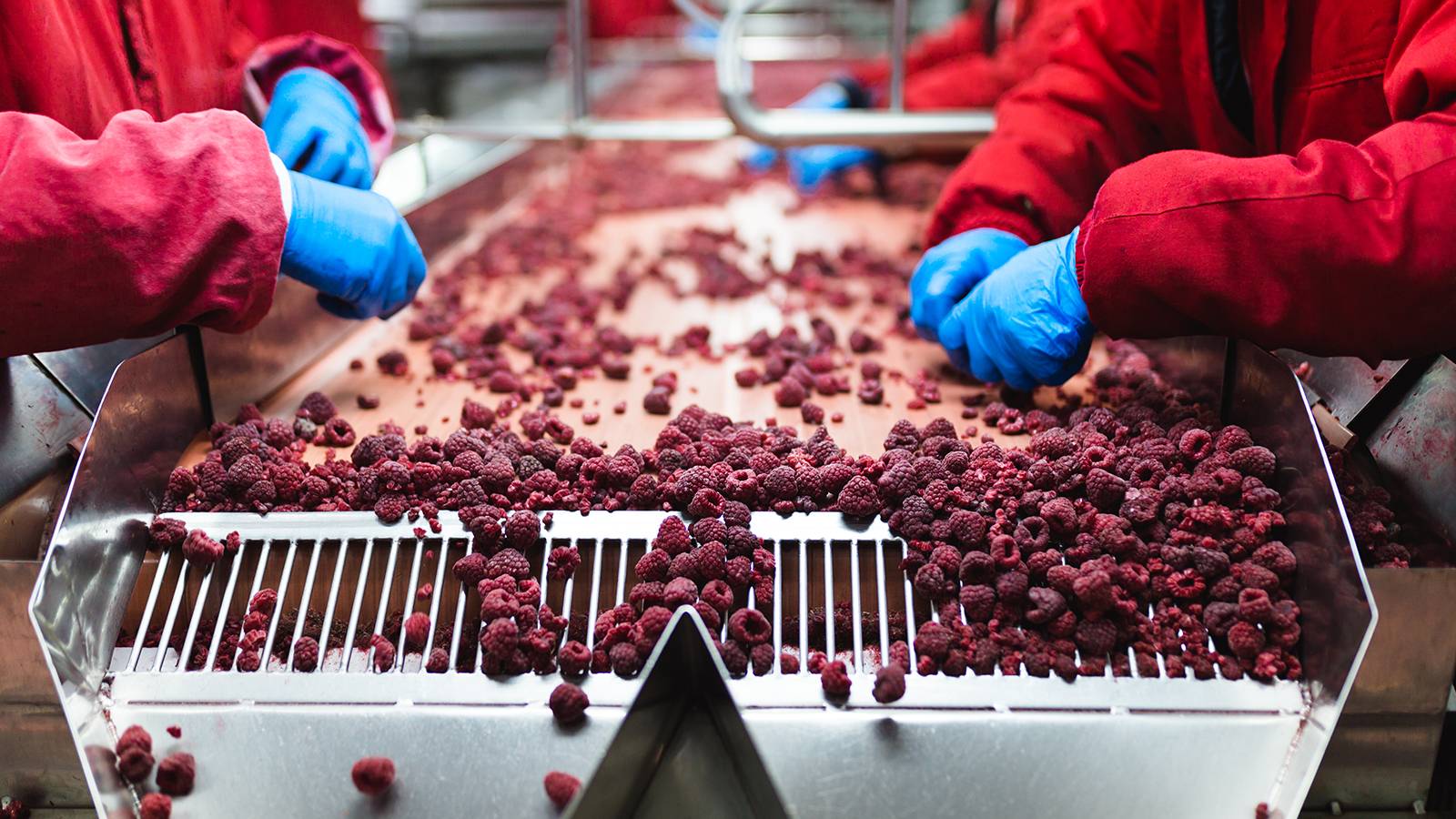
Why Blue Stands Out in Food Processing
Blue is rarely found in natural food products. For that reason, it is commonly selected for PPE and hygiene-related items that must remain clearly visible during production.
If part of a glove or plaster enters the product stream, it is more likely to be noticed quickly. Production can then be stopped and corrective action taken.
In this context, colour functions as a control measure. It helps reduce the risk of physical contamination.
Blue and Food Safety Standards
Blue products fit well within established food safety systems such as HACCP, ISO 22000 and BRCGS. These standards require companies to demonstrate how they control contamination risks and how deviations are identified. Visual contrast plays a practical role in that control.
Examples include:
- Personal hygiene and PPE: Blue gloves, hairnets and beard masks are used because they remain visible within product flows.
- Cleaning and tool management: Many cleaning tools are blue so they can be identified quickly on the production floor.
- Plasters and wound care: Food-safe plasters are almost always blue and often contain detectable elements.
The Role of Detectable Products
Many blue items are available in metal-detectable or X-ray-detectable versions. These contain components that can be identified by inspection systems if they enter the product stream.
They are typically used in environments with:
- Automated metal detection
- High production speeds
- Increased contamination risk
Within HACCP and BRCGS frameworks, detectable products are often implemented as an additional safeguard.
Popular Food Safety Products
Selecting the Right Products
Choosing blue or detectable products depends on several factors:
- Whether metal detection or X-ray inspection is present
- The contamination risk within the process
- Customer or certification requirements
- Hygiene zones and clothing policies
The QA or HSE manager usually determines product selection based on the site’s risk assessment and production setup.
Examples of Blue, Detectable Products
In practice, the focus is on products used close to the product stream, such as:
- Food-grade nitrile gloves
- Detectable plasters (PE/PU, waterproof)
- Detectable head protection
- Food-safe tools and work equipment
- Detectable office supplies
These products make it easier to identify foreign objects during production or inspection.
Advice from a PPE Specialist
Applying blue and detectable products correctly requires alignment with internal procedures, hygiene zoning and audit expectations. If audit requirements change, production is modified or non-conformities occur, it is advisable to review product selection and application.
Our PPE specialists advise companies in food production, logistics and catering on appropriate PPE and detectable solutions.
Email us at info@safetyproducts.com or call +31 (0)314 757 300.
You might also like

EN 14404:2024 updated standard for knee protection
What does this mean in practice? In many professions, knee protection is essential, especially where prolonged kneeling...
New rules for allergen labelling from January 2026
Allergen warnings must be better substantiated From 1 January 2026, new rules for allergen labelling will come into forc...
Allergen Management in the Food Industry
Managing allergens in daily food production Allergens are a distinct risk within food safety. Unlike microbial risks, ev...
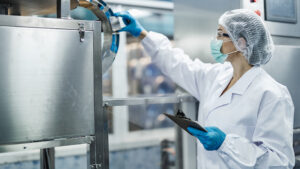
FSSC 22000 Certification
The globally recognised standard for food safety management FSSC 22000 (Food Safety System Certification) supports organ...
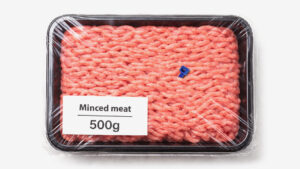
Detectable versus Non-Detectable
Why are detectable products relevant in production environments? On a production line, a broken pen or a lost plaster ca...

African Swine Fever (ASF): Reducing the Risk of Infection
The Human Factor Makes Farms Vulnerable – Hygiene and PPE Are Critical for Prevention African Swine Fever (ASF) contin...
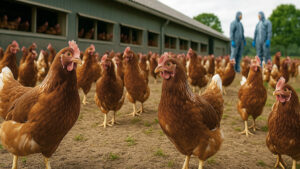
Avian Influenza H5N1: Risks, Prevention and PPE
Practical Hygiene and PPE Measures for Work Involving Poultry Avian influenza, including the H5N1 virus, is a recurring...
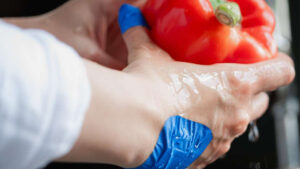
IFS Food: International Standard for Food Safety
IFS Food and the Requirement for Waterproof Plasters IFS Food is one of the most widely recognized food safety standards...

Nitrile gloves – food grade
High-quality disposable nitrile gloves Disposable blue nitrile gloves are nowadays the standard in the food industry, th...

Colour coding for food safety in the food industry
Prevent cross-contamination with clear colour zones Colour coding in the food industry is a simple principle with substa...

Safe Use of Disposables and PPE in the Cheese Industry
Essential Guidelines for Hygiene and Food Safety in Cheese Production Cheese production takes place in an environment wh...
The 5S Lean Method: Structure and Organization on the Shop Floor
Workplace organization as the foundation for safe and efficient operations Order and organization on the shop floor requ...