Allergen Management in the Food Industry
Managing allergens in daily food production
Allergens are a distinct risk within food safety. Unlike microbial risks, even small amounts can trigger reactions in sensitive consumers. For this reason, controlling allergens is not just about product quality, but about consumer safety.
In food production, different ingredients and product lines are often processed on the same site.That is why allergen management is a standard part of quality management, hygiene procedures, and traceability.

Allergens and Food Allergies
For consumers with a food allergy, exposure to an allergen can lead to various physical reactions. In milder cases, this includes skin irritation, itching, swelling, or gastrointestinal issues. In more severe cases, a reaction can rapidly develop into breathing problems or an anaphylactic reaction, where immediate medical attention is required.
Because reactions can occur even at very low concentrations and sensitivity varies greatly between individuals, strict allergen control is essential.
In manufacturing environments, not only visible contamination must be prevented, but also residual allergenic protein traces. To check this, companies use verification methods, such as rapid protein tests and allergen swabs that indicate whether surfaces are truly free from residues.
These checks help show whether cleaning procedures are actually removing allergen residues effectively.
What Are Allergens in Food Safety
An allergen is a protein that can trigger a reaction in some consumers. The reaction occurs when the immune system interprets a normal food ingredient as harmful. Even very small amounts of an allergen can be enough to cause symptoms, which is why accurate ingredient control and clear communication are so important in food safety.
In food safety, allergen management is therefore not about food quality in the traditional sense, but about consumer protection and providing accurate information. Recalls due to allergen contamination are reported weekly in the news and have significant consequences for both products and consumers.
European Allergen List
In the European Union, fourteen allergens must be legally declared when they are present as ingredients in a food product. EU regulation 1169/2011 (Food Information to Consumers) establishes this list and provides the legal framework for allergen labelling across the European Union.
The main allergens are:
- Gluten-containing cereals (such as wheat, rye, barley, oats, spelt, and khorasan)
- Crustaceans
- Eggs
- Fish
- Peanuts
- Soy
- Milk and milk-based products (including lactose)
- Nuts (such as almonds, hazelnuts, walnuts, cashews, pistachios)
- Celery
- Mustard
- Sesame
- Sulphites (>10 mg/kg)
- Lupin
- Molluscs
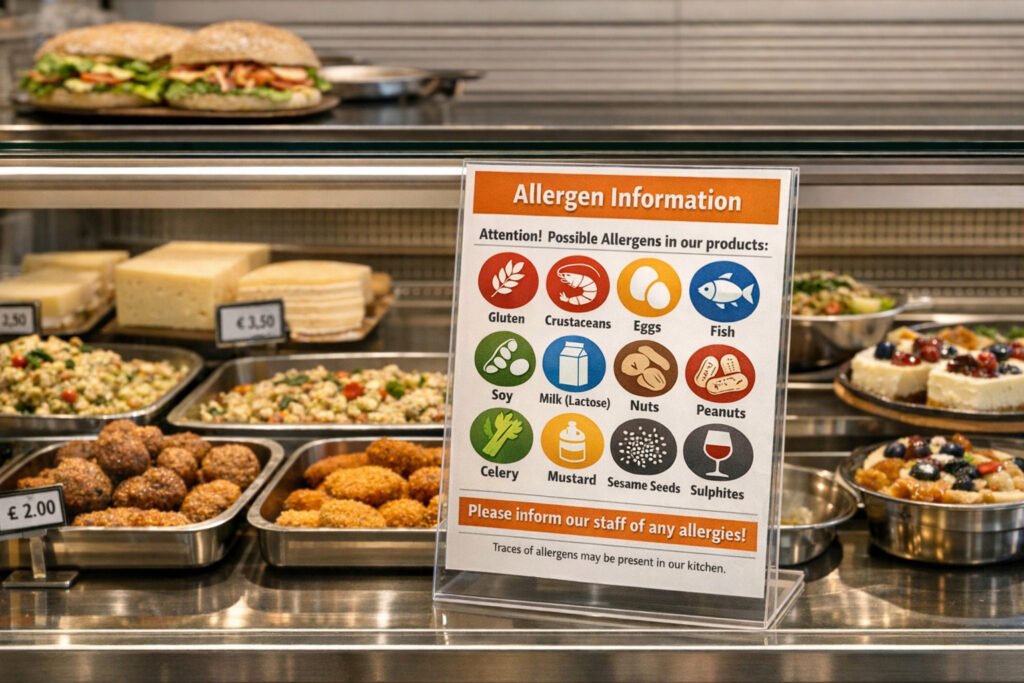
This list forms the basis for labelling and allergen management in Europe. For some highly refined ingredients, specific exceptions apply within the legislation, but the obligation to provide information remains a key principle for producers.
Popular allergen tests
What Matters in Allergen Management
Although allergens are biologically classified as proteins, they are often treated as a chemical hazard in food safety systems such as HACCP. This is because allergens do not grow or multiply like microorganisms. Within allergen management, several recurring points require attention.
Separation of Ingredient Streams
In manufacturing environments where multiple recipes are processed, there is a risk that allergenic ingredients may unintentionally end up in other products. This is known as cross-contamination.
This can occur, for example, via shared production equipment or product residues left in pipes, mixers, or dosing systems. Additionally, conveyor belts, work surfaces, and tools can contribute to cross-contamination when different product streams use the same infrastructure. Even small amounts are relevant.
To mitigate this risk, companies implement various control measures, such as physical separation of product streams, separate storage, and, in some cases, visual aids like colour coding.
Product Integrity and Labelling
Correct labelling is also critical. When an allergen is present in a product but not listed on the packaging, this can lead to severe incidents and, in many cases, a recall.
European food recalls often show that allergen incidents are related to labelling issues. These can range from incorrect packaging or label rolls to errors in formulation management or product mix-ups during the packaging process.
Process Organization
Allergen management typically involves multiple disciplines within an organization. Formulation management, production planning, and cleaning policies are part of it, as well as personnel practices, documentation, and traceability.
Allergen control usually relies on a combination of organisational and technical measures.
Practical Example: Incorrect Allergen Labelling
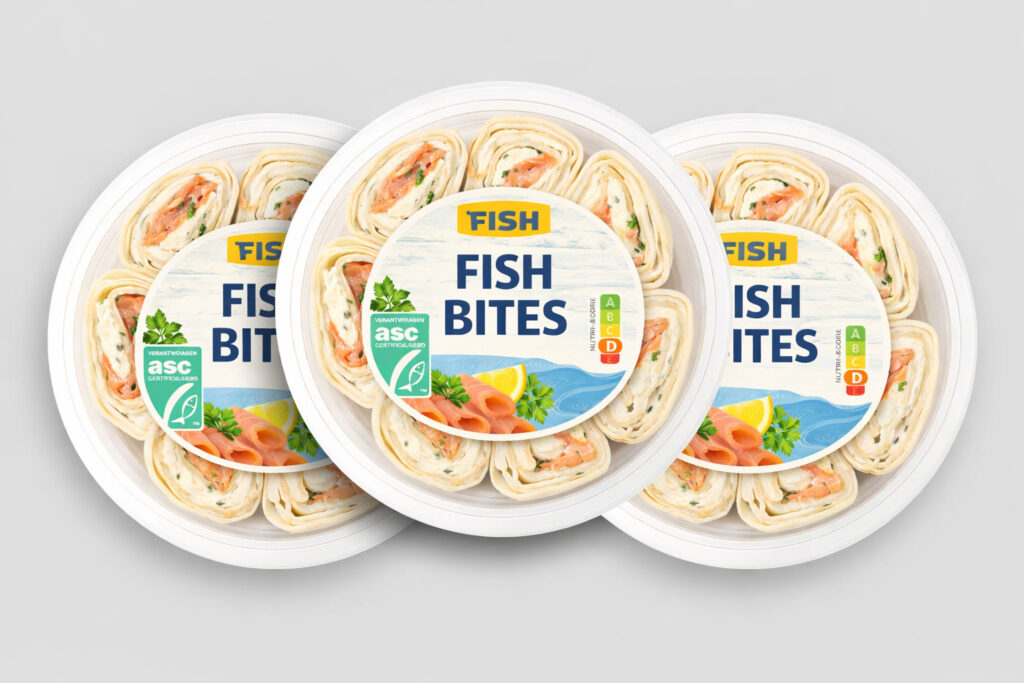
In the food industry, allergen incidents often arise from labelling errors. A practical example is a fish snack being withdrawn from the market due to an incorrect label. This leads to the omission of allergens such as fish and gluten, even though they may be present in the product.
For consumers with an allergy or intolerance, this can result in health risks. For this reason, a company may initiate a recall, removing the product from the market as a precaution.
This happens regularly in the food industry. In European food safety reports, two primary causes often recur: missing allergen information on labels and cross-contamination during product changes on shared lines. For instance, when a product containing milk ingredients is followed by a dairy-free product and residue is left behind.
Allergen incidents therefore occur not only due to recipe management but also due to labelling, process transitions, and insufficiently removed product residues.
Hygienic Work Practices in Relation to Allergens
In day-to-day production, cross-contamination can occur through surprisingly simple routes. This can happen when ingredients are moved between production lines.
Tools can also be used in multiple locations, or work surfaces may not be fully cleaned in between uses. As a result, employee behaviour plays an important role in allergen management.
Many food manufacturers apply hygienic zoning, where production areas are categorized based on risk, such as low care, high care, or high-risk zones. By separating product flows, staff, and materials, the risk of allergen cross-contamination is reduced.
Zoning includes both physical separation and organizational measures, such as clothing changes, tool management, and zone-specific cleaning.
Colour Coding and Visual Separation
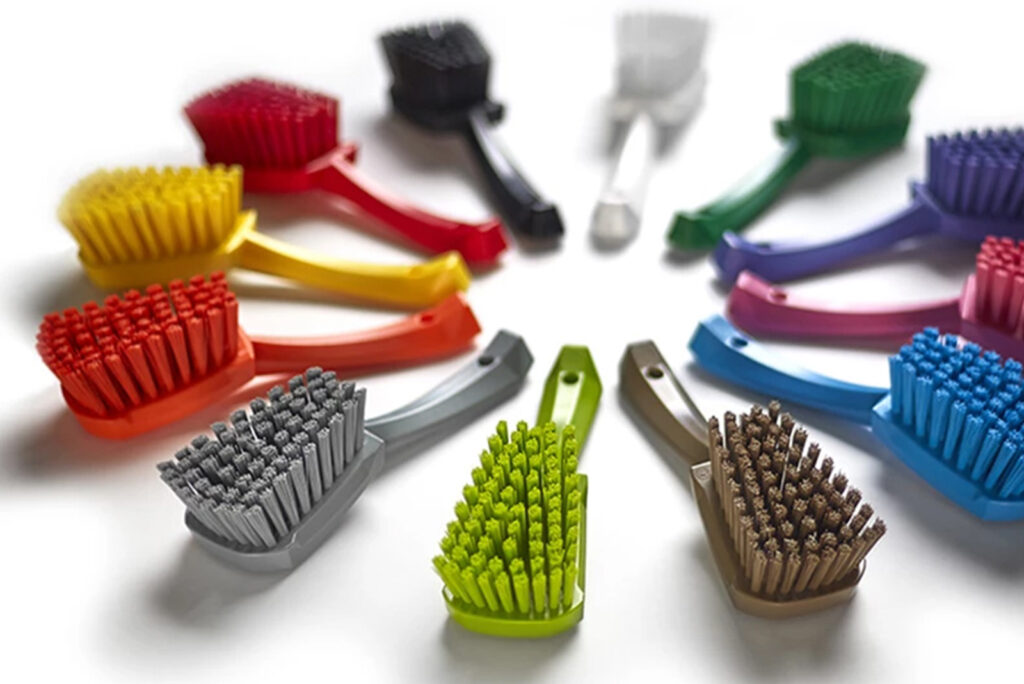
Colour coding can be used as a practical visual aid to separate materials and tools by allergen flow. For instance, assigning a specific colour to cleaning materials, tools, or storage racks creates visual control. This reduces the likelihood of materials being exchanged between allergenic and non-allergenic product flows.
In some manufacturing environments, colours are even linked to specific allergens or allergen zones. This makes it immediately clear which materials belong to which zone.
Colour coding can be applied to:
- Production lines with specific allergens
- Cleaning materials for specific zones
- Temporary production campaigns
The system varies by organisation. Some companies use colour coding for hygiene zones, while others link colours to specific allergen flows.
Cleaning as a Critical Factor
Allergens are protein structures that can adhere to surfaces. Depending on the product type and process, they can be difficult to remove. In production processes involving fatty ingredients, dough-like mixtures, or sticky sauces, protein residues can bind firmly to surfaces.
Surfaces, machines, and tools must be thoroughly cleaned to remove allergenic protein residues. Disinfection alone is not sufficient. Cleaning focuses on removing product residues and protein remnants, while disinfection is intended for microbiological control and does not remove allergens. The focus is on effective cleaning and on being able to show that residues have been removed.
Some manufacturing companies make cleaning materials used for allergenic product flows specifically identifiable or store them separately. This prevents brushes, scrapers, or other tools that have come into contact with allergens from being used later in areas where no allergens are present.
In addition to cleaning procedures, the design of tools and equipment is also an important consideration. This is why many manufacturers choose materials with a hygienic design, such as smooth surfaces and without hard-to-clean corners or seams. This makes it easier to effectively remove product residues and allergenic protein traces.
Scope and Relevance
Allergen management becomes particularly important in production environments where speed and product variation go hand in hand. Companies that produce multiple recipes simultaneously, combine ingredient flows, or use flexible production lines are at a greater risk of cross-contamination.
This applies to bakeries, pastry manufacturers, dairy processors, meat and deli product producers, sauce and meal component manufacturers, snack makers, and industrial meal producers. Allergen management also plays a role in packaging, repackaging, and logistics activities. This is especially relevant when products with different ingredient profiles are processed in the same space.

Post-Cleaning, Verification, and Audits
In quality management systems, verification is an important tool to demonstrate that allergen management is effective. Organizations use various forms of control, ranging from visual inspections to protein detection tests, allergen swabs, and allergen tests in the form of rapid tests, which often provide results within approximately 5 minutes. Specific analytical techniques may be used, such as ELISA tests or PCR-based methods for allergen detection.
During audits, such as those according to BRCGS, IFS Food, and FSSC 22000, allergen management is routinely assessed as part of the risk assessment and process control.
Some companies work with different monitoring zones. Surfaces are categorized based on their proximity to the product, such as food contact surfaces, nearby equipment, and peripheral environmental surfaces. This principle is applied not only for microbiological monitoring but also for targeted allergen residue checking.
In many cases, such methods are used to verify cleaning procedures and, where necessary, validate them in advance. Validation focuses on proving that a method effectively removes allergens, while verification is intended to routinely check whether the process continues to function.
During food safety audits, multiple elements are examined. For example, allergen risk analysis within the HACCP system, product and ingredient specifications, label checks, and the validation of cleaning methods. Production planning and product changeover records are often also part of this assessment.
Together, these documentation and verification activities give auditors insight into how organizations demonstrate that allergen risks are systematically controlled.
Common Errors in Allergen Management
Despite extensive control measures, allergen incidents continue to occur regularly. Typical causes include:
Unintentional Product Mix-up
At high production speeds or during frequent product changes, incorrect packaging or label rolls may be used.
Insufficient Separation of Raw Materials
Storage areas where allergenic and non-allergenic ingredients are stored close to each other increase the risk of cross-contamination.
Employee Behaviour
Employees often move between production lines, warehouses, and production zones. Without clear hygienic routines, transfer can occur via clothing, gloves, or tools.
Personal Hygiene
Personal hygiene is essential in preventing allergen transfer. Hand cleaning and disinfection are basic measures, and disposable protective equipment must be replaced on time to prevent cross-contamination.
Recipe Changes
When ingredients are adjusted without labels being updated in time, incorrect allergen information can arise. Additives, flavourings, spice mixes, and other composite ingredients can also unexpectedly contain allergens.
Incomplete Cleaning
Especially with complex machines or hard-to-reach parts, product residues can remain.
Relationship with PPE and Hygiene Products
In allergen management, organizations use PPE and hygiene products as part of overall hygiene and risk management.
Disposable protective equipment is clean, hygienic, and easy to replace during shift changes, breaks, or task changes.
These products help minimize transfer via employees, tools, and work surfaces.
Reliable Allergen Tests
Allergen tests are a practical way to check whether allergen residues are still present after cleaning. These rapid tests provide a reliable result within 5 minutes after cleaning.
For allergen detection and food safety, Safety Products B.V. works with Neogen test methods. With Neogen’s reliable rapid tests, you get quick results so production can resume without delay.

Soy

Sesame seeds

Crustaceans

Peanut

Mustard

Coconut

Hazelnut

Gluten

Egg

Tree nut

Almond

Milk
Advice from a PPE Specialist
Want to see how this works in practice within your own organisation? Our specialists support companies in the food industry, catering and logistics every day.
Feel free to contact us via info@safetyproducts.com or call +31 (0)314 757 300.
You might also like

EN 14404:2024 updated standard for knee protection
What does this mean in practice? In many professions, knee protection is essential, especially where prolonged kneeling...

New rules for allergen labelling from January 2026
Allergen warnings must be better substantiated From 1 January 2026, new rules for allergen labelling will come into forc...

FSSC 22000 Certification
The globally recognised standard for food safety management FSSC 22000 (Food Safety System Certification) supports organ...
Detectable versus Non-Detectable
Why are detectable products relevant in production environments? On a production line, a broken pen or a lost plaster ca...

African Swine Fever (ASF): Reducing the Risk of Infection
The Human Factor Makes Farms Vulnerable – Hygiene and PPE Are Critical for Prevention African Swine Fever (ASF) contin...
Avian Influenza H5N1: Risks, Prevention and PPE
Practical Hygiene and PPE Measures for Work Involving Poultry Avian influenza, including the H5N1 virus, is a recurring...

ISO 22000: the standard for food safety
International food safety management from raw material to distribution ISO 22000 is a globally recognized standard for f...

IFS Food: International Standard for Food Safety
IFS Food and the Requirement for Waterproof Plasters IFS Food is one of the most widely recognized food safety standards...
Nitrile gloves – food grade
High-quality disposable nitrile gloves Disposable blue nitrile gloves are nowadays the standard in the food industry, th...
Colour coding for food safety in the food industry
Prevent cross-contamination with clear colour zones Colour coding in the food industry is a simple principle with substa...
Why Blue Is Commonly Used in Food Production Environments
Visibility and Detectability of Blue Products in Food Processing In food production, colour is not a design choice. It s...

Safe Use of Disposables and PPE in the Cheese Industry
Essential Guidelines for Hygiene and Food Safety in Cheese Production Cheese production takes place in an environment wh...