BRCGS Issue 9: detectable products for food safety
Preventing contamination and foreign objects
By using BRCGS Issue 9–certified detectable products, the risk of contamination and foreign objects (physical hazards) can largely be eliminated.
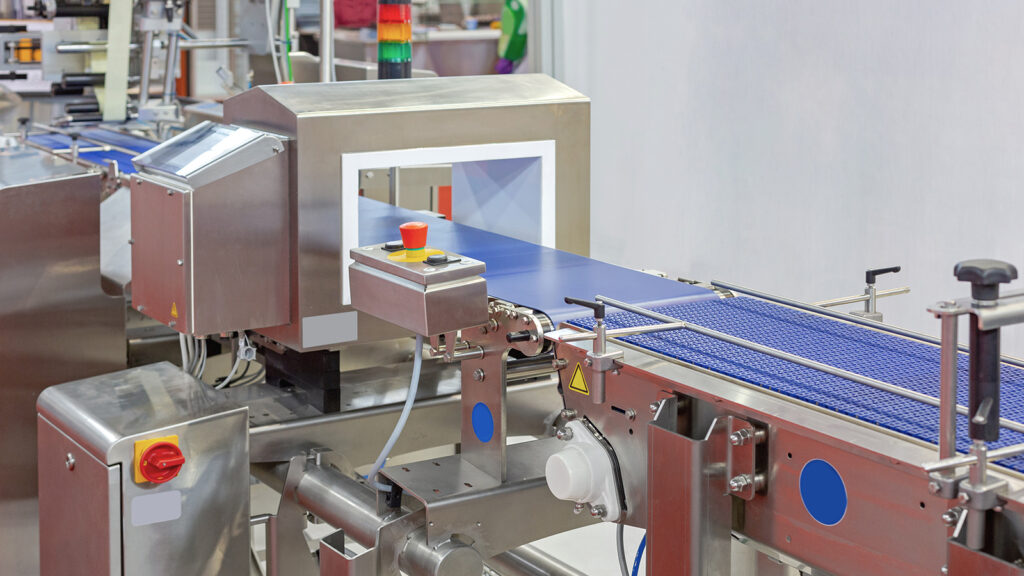
Food industry: controlling physical contamination risks is crucial
International standards such as the BRCGS Global Standard for Food Safety set clear requirements for materials and tools used in hygienic production environments where products are directly exposed to the surroundings. This particularly concerns open product environments within food production, where the risk of physical contamination must be actively controlled.
BRCGS stands for Brand Reputation through Compliance Global Standards.
A well-known point of attention during audits is the use of office supplies, such as pens, in production areas. Common risks in practice include:
- Loss of writing utensils in the production environment
- Detached parts or fragments
- Unintentional cross-contamination
- Foreign objects in open product flows
What does BRCGS Issue 9 say about pens in the food industry?
Issue 9, the current and most recent edition of the BRCGS Global Standard for Food Safety, sets specific requirements for the use and control of pens in the food industry.
For example, clause 4.9.6.2 requires that pens in open product areas are controlled. These are hygienic production areas where products are directly exposed to the environment. The objective is to minimize the risk of physical contamination, for example by using detectable writing instruments without loose parts.
This means that companies must demonstrate that pens or markers:
- Do not contain loose or small parts
- Are detectable by metal detection, X-ray detection, or both
- Fit within the company’s food safety policy
Fully detectable pens and markers as a control measure
To meet this requirement, many companies choose fully detectable pens or markers manufactured as a single piece. These products are made from detectable plastic containing minute metal particles, allowing even small fragments to be recognized by detection systems.
Not only the housing, but also internal components such as the ink refill (cartridge) are detectable. This reduces the risk of detached parts entering the product unnoticed.
With conventional detectable pens, there is a risk that the refill itself is not detectable. If it becomes detached, this can still lead to contamination that is not recognized by detection systems.
Detectable writing instruments in which all components, including the refill, push button, and other parts, are made from metal- and X-ray–detectable material significantly reduce this risk.
Relevance for audits and food safety systems
Within audits and food safety systems, the exclusion of physical contamination risks plays an important role. The use of fully detectable office supplies supports companies in:
- Demonstrably controlling physical risks
- Meeting BRCGS audit requirements
- Strengthening food safety culture
- Limiting non-conformities during inspections
For many detectable products, additional documentation is available, such as datasheets and product specifications. These documents provide insight into material composition, detectability, and food safety compliance. During audits, such downloads are often used to demonstrate that applied products meet the specified requirements, for example with regard to metal and X-ray detection and food contact materials.
Within food safety systems such as BRCGS, HACCP, and IFS, these types of preventive measures are increasingly regarded as best practice.

Detectable products as a practical implementation of BRCGS requirements
Under BRCGS Issue 9, companies are expected to actively control physical contamination risks. This applies not only to raw materials and machinery, but also to tools such as food grade PPE and detectable office supplies used in open product environments within the production area.
By using materials that can be identified by metal and X-ray detection, companies can demonstrably reduce the risk of unwanted foreign objects.
These products support companies in meeting BRCGS requirements, limiting non-conformities during audits, and strengthening the food safety culture.
Within controlled production environments, the following product groups are available:
- Writing instruments and clipboards
- Food grade disposables
- Hearing protection
- Tools
- Work equipment
- Safety knives
- Knives
Popular detectable products
Possible consequences of non-detectable writing instruments
Non-detectable writing instruments increase the risk of foreign objects in the finished product. In the event of loss or damage, this can lead to blockages, rejections, or recalls. Recalling a batch involves high costs, including product loss, additional time and resources, and potential damage to brand reputation.
By choosing detectable writing instruments tailored to food-safe production environments, companies can effectively control these risks. Combined with clear procedures and well-substantiated product choices, this contributes to a demonstrably robust food safety system and a smooth audit process.
Brands for food-safe detectable products
Within food-safe production environments, detectable products from various specialized suppliers are used. Some commonly used brands offering detectable products for applications where food safety is paramount include:
- Detectamet
- Vikan
- Conan Protection
- Martor
- Bürkle
- Cederroth
- Detectaplast
You might also like

EN 14404:2024 updated standard for knee protection
What does this mean in practice? In many professions, knee protection is essential, especially where prolonged kneeling...

New rules for allergen labelling from January 2026
Allergen warnings must be better substantiated From 1 January 2026, new rules for allergen labelling will come into forc...

Allergen Management in the Food Industry
Managing allergens in daily food production Allergens are a distinct risk within food safety. Unlike microbial risks, ev...

FSSC 22000 Certification
The globally recognised standard for food safety management FSSC 22000 (Food Safety System Certification) supports organ...
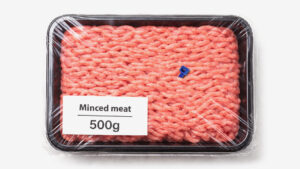
Detectable versus Non-Detectable
Why are detectable products relevant in production environments? On a production line, a broken pen or a lost plaster ca...

African Swine Fever (ASF): Reducing the Risk of Infection
The Human Factor Makes Farms Vulnerable – Hygiene and PPE Are Critical for Prevention African Swine Fever (ASF) contin...
Avian Influenza H5N1: Risks, Prevention and PPE
Practical Hygiene and PPE Measures for Work Involving Poultry Avian influenza, including the H5N1 virus, is a recurring...

IFS Food: International Standard for Food Safety
IFS Food and the Requirement for Waterproof Plasters IFS Food is one of the most widely recognized food safety standards...
Nitrile gloves – food grade
High-quality disposable nitrile gloves Disposable blue nitrile gloves are nowadays the standard in the food industry, th...
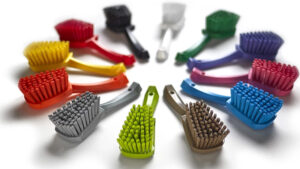
Colour coding for food safety in the food industry
Prevent cross-contamination with clear colour zones Colour coding in the food industry is a simple principle with substa...
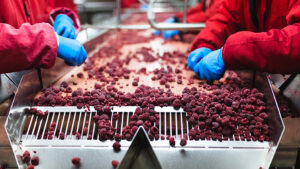
Why Blue Is Commonly Used in Food Production Environments
Visibility and Detectability of Blue Products in Food Processing In food production, colour is not a design choice. It s...

Safe Use of Disposables and PPE in the Cheese Industry
Essential Guidelines for Hygiene and Food Safety in Cheese Production Cheese production takes place in an environment wh...