Detectable versus Non-Detectable
Why are detectable products relevant in production environments?
On a production line, a broken pen or a lost plaster can quickly become a serious issue. Even small fragments can have significant consequences if they go unnoticed and enter the product. Physical contamination can result in product holds, recalls and additional corrective measures, particularly when a fragment is not identified in time within the process.
Detectable products are manufactured so they can be identified by metal detection or X-ray systems in the event of loss or breakage. Within broader hygiene and PPE policies, they form one of the practical measures used to control physical contamination.
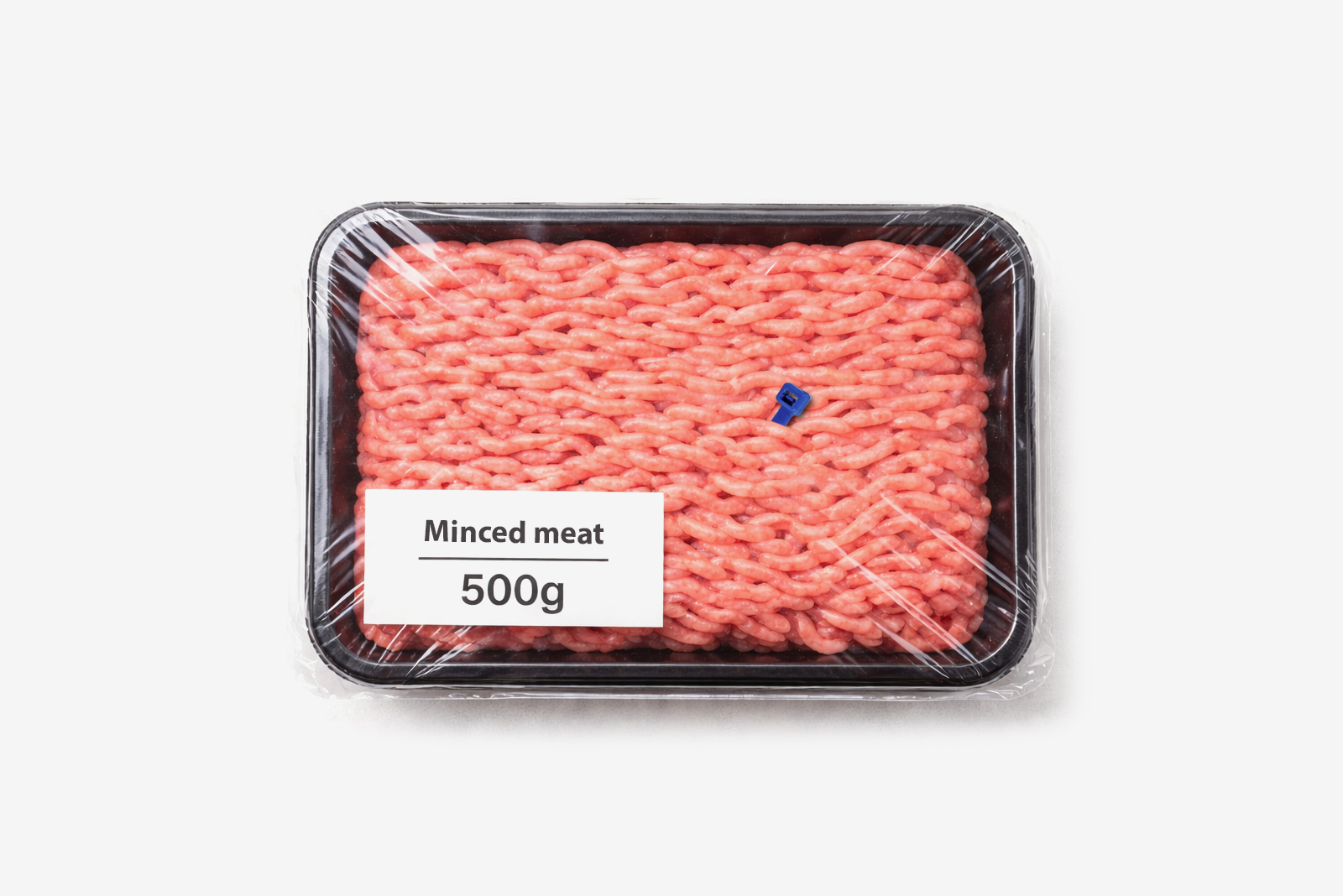
What is meant by detectable?
Detectable means that a product is manufactured in such a way that it can be identified by metal detection or X-ray systems. This may be achieved through metal particles embedded in plastic, a fully metal component, or a combination of both. Such products are often produced in blue, the standard colour in food processing, to improve visual visibility.
Non-detectable variants are typically made from standard plastic or combinations of plastic and separate components that are not, or only minimally, visible in detection systems.
A simple example is the difference between a standard ballpoint pen and a detectable pen made from metal-detectable plastic with a stainless-steel ink cartridge.
Where a regular pen may remain unnoticed in the process if lost, a detectable version can be traced through existing inspection systems.
Non-Detectable Tools: A Risk for Control and Audits
The difference becomes critical when organisations need to demonstrate that physical risks are under control. During audits against standards such as BRCGS, IFS or FSSC 22000, auditors explicitly assess how physical contamination is managed. The use of non-detectable tools in environments where metal detection or X-ray inspection is in place may raise questions about the robustness of the underlying risk assessment.
During customer visits, supply chain audits and internal risk reviews, it is also evaluated whether selected tools align with the existing control systems. If a lost component cannot be identified by the installed detection systems, reliance shifts to chance or visual inspection. This increases the likelihood that an incident is only discovered at a later stage.
In production environments where metal detection or X-ray inspection forms part of the process, detectable materials are therefore a logical complement to existing control measures. They do not replace detection systems, but they reduce the risk when an item does remain within the process.
Detectability does not guarantee that every fragment will be found under all circumstances. Factors such as fragment size, product type, position within the product and detector settings all influence detection capability.
Applications of Detectable Products in Production Environments
Detectability is not limited to a single type of tool. A wide range of detectable products is used in production environments, depending on the process, zone and risk assessment, including detectable:
- Pens, markers and clipboards
- Plasters and hairnets
- Knives, scissors and safety knives
- Hand scoops and buckets
- Earplugs
- Bag clips and sealing clips
The difference is often found in small design details. A metal strip in a plaster, a stainless-steel ink cartridge in a pen or metal components within a safety knife ensure that a lost item can still be identified within the process. At the same time, many detectable designs are engineered to avoid detachable or loose parts.
Non-detectable variants fulfil the same functional role, but without additional visibility within detection systems.

Popular detectable products
Detectable Products Within the Control System
Within hygiene and PPE policies, detectable materials represent one of the possible control measures against physical contamination. Examples include detectable plasters for minor cuts, hairnets in production environments, earplugs in high-noise areas or tools used in mixing and dosing processes.
The choice of detectable versions depends on the risk assessment, process design and the presence of metal detection or X-ray systems. Detectable products never stand alone; they form part of a broader control system in which risk analyses (HACCP), internal procedures and product specifications all play a role.
Standards such as BRCGS and IFS do not explicitly mandate the use of detectable tools. However, they do require that physical hazards are demonstrably controlled. Depending on the outcome of the risk assessment, detectable products may represent an appropriate control measure. During audits, the justification for using detectable, or non-detectable, tools within specific zones is therefore assessed.
Product Integrity and Design
In addition to detectability, product construction plays an important role. With detectable versions, attention is paid not only to visibility in metal detection or X-ray systems, but also to the technical design of the product. Manufacturers often deliberately choose constructions without detachable or loose parts to minimise the risk of fragmentation.
Detectable products are typically robust in design and feature smooth surfaces that are easy to clean. The objective is not only to recover a lost component, but above all to prevent it from becoming detached in the first place. This reduces risk at an early stage.
Detectable: Context in practice
In production environments where metal detection is a standard part of the line, the use of non-detectable office supplies or tools can raise questions.
During audits, for example, it is not uncommon to find standard ballpoint pens still being used in production areas where metal detection is present. This often leads directly to discussion regarding the underlying risk assessment.
In high-care zones or bulk production environments, the use of detectable tools may be entirely logical. In settings without detection systems or where the physical risk is low, the relevance may be more limited. The right choice depends on the context and the risk assessment.

Consequences of Non-Detectable Tools in the Production Process
The use of non-detectable tools in a production environment where metal detection or X-ray inspection is applied increases the risk that lost components may enter the product unnoticed. If a fragment cannot be identified by existing control systems, detection becomes dependent on chance or visual inspection.
The potential consequences extend beyond a single damaged product. They may include:
- Product holds or line stoppages
- Rejection of entire production batches
- Product recalls when contamination is discovered at a later stage
- Waste of raw materials, energy and labour
- Additional investigation, reporting and corrective actions
- Damage to brand reputation and loss of customer confidence
Particularly in export operations, private label production or supply to major retail chains, the financial and contractual implications can be significant. An incident involving physical contamination often remains visible in audit reports and supplier assessments for an extended period.
Detectable tools do not eliminate such risks entirely, but they reduce the likelihood that a lost component will remain unnoticed. They help control risk before it escalates into a costly or reputationally damaging event.
Brands with Detectable Solutions for Risk Control
Brands such as Vikan, Detectamet, Conan and Detectaplast supply detectable products developed for use in hygiene-sensitive production environments. Within their ranges, tools are available that are metal-detectable and/or X-ray detectable, ensuring compatibility with existing detection systems.
Within their ranges, tools are available that are metal-detectable and/or X-ray detectable, ensuring compatibility with existing detection systems.
These brands are well suited to organisations that need to demonstrate control over physical contamination within their risk assessments and product specifications.





Advice from a PPE Specialist
Is your organisation considering how detectable products fit within your current control system? We are happy to advise on both the practical application and the regulatory justification.
Please feel free to contact us at info@safetyproducts.com or call +31 (0)314 757 300.
You might also like

EN 14404:2024 updated standard for knee protection
What does this mean in practice? In many professions, knee protection is essential, especially where prolonged kneeling...

New rules for allergen labelling from January 2026
Allergen warnings must be better substantiated From 1 January 2026, new rules for allergen labelling will come into forc...

Allergen Management in the Food Industry
Managing allergens in daily food production Allergens are a distinct risk within food safety. Unlike microbial risks, ev...

FSSC 22000 Certification
The globally recognised standard for food safety management FSSC 22000 (Food Safety System Certification) supports organ...

African Swine Fever (ASF): Reducing the Risk of Infection
The Human Factor Makes Farms Vulnerable – Hygiene and PPE Are Critical for Prevention African Swine Fever (ASF) contin...

Avian Influenza H5N1: Risks, Prevention and PPE
Practical Hygiene and PPE Measures for Work Involving Poultry Avian influenza, including the H5N1 virus, is a recurring...

ISO 22000: the standard for food safety
International food safety management from raw material to distribution ISO 22000 is a globally recognized standard for f...

IFS Food: International Standard for Food Safety
IFS Food and the Requirement for Waterproof Plasters IFS Food is one of the most widely recognized food safety standards...

Nitrile gloves – food grade
High-quality disposable nitrile gloves Disposable blue nitrile gloves are nowadays the standard in the food industry, th...
Colour coding for food safety in the food industry
Prevent cross-contamination with clear colour zones Colour coding in the food industry is a simple principle with substa...
Why Blue Is Commonly Used in Food Production Environments
Visibility and Detectability of Blue Products in Food Processing In food production, colour is not a design choice. It s...

Safe Use of Disposables and PPE in the Cheese Industry
Essential Guidelines for Hygiene and Food Safety in Cheese Production Cheese production takes place in an environment wh...