Food-safe cleaning paper in the food industry
Hygienic cleaning and absorption in food-safe production environments
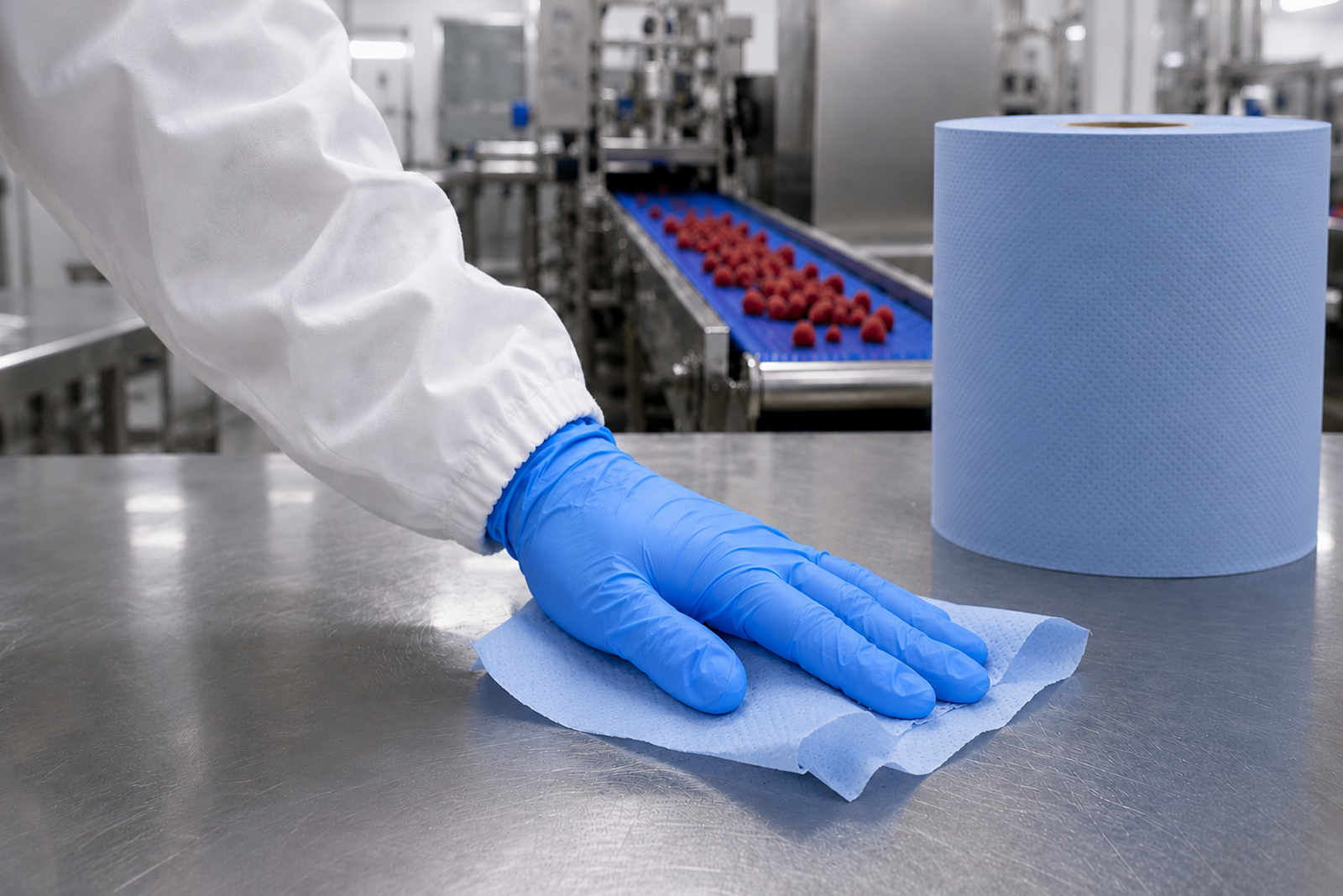
Cleaning paper is an essential part of daily operations in the food industry. It is commonly used for cleaning work surfaces, absorbing moisture and keeping machinery or production lines clean. In food production, absorbency alone is not enough. The suitability of the material for use in hygienic production areas is equally important.
Food-grade cleaning paper is mainly used in production areas where hygiene and food safety are critical. In these settings, colour coding, allergen control and detectable materials are often part of the hygiene policy.
What is food-safe cleaning paper?
Food-safe cleaning paper is designed for use in hygienic food production areas. It is not only about hygiene, but also about linting, material safety and traceability.
Audits and quality inspections also assess the properties of consumable products used in production areas, especially cleaning paper. Standard industrial paper may contain adhesive residues, colourants or loose fibres that are undesirable in food-safe settings.
Food-grade paper is manufactured using raw materials and production processes that meet the requirements of the food industry. Product specifications, Declarations of Conformity (DoC) and food safety statements are often available for quality departments and auditors
Food-Grade versus standard industrial cleaning paper
Many types of cleaning paper look similar, but there are important differences in food-safe environments. Non-food-grade cleaning paper is commonly used in workshops, technical services and warehouses, where absorbency and cost are usually the main priorities.
Within the food industry, however, other factors are equally important:
- Suitability for use around food products
- Reduced lint formation
- Control of colourants and raw materials used
- Availability of documentation for audits
- Visibility and recognisability in production areas
This is one of the main reasons why blue cleaning paper is widely used in food production areas.
Why blue cleaning paper is widely used
Blue is the standard colour used in the food industry. This is not because of its absorbency, but mainly because of its visibility.
Blue rarely occurs naturally in food products. As a result, small pieces of paper or fibres are easier to detect during production or quality inspections. This makes contamination easier to spot during production and cleaning.
For this reason, blue disposables are commonly used in HACCP systems and hygiene protocols. Examples include hairnets, gloves, detectable products and cleaning paper.
In areas where raw materials, moisture or cleaning agents are used, blue cleaning paper offers another practical advantage: contamination is highly visible. This makes it easier to replace the paper in time during production or cleaning processes..
Properties of food-grade cleaning paper
Not all types of cleaning paper have the same characteristics. This depends on the layer construction, fibre composition and intended application.
Important properties include:
- High absorbency
- Wet strength
- Low lint formation
- Tear resistance
- Suitability for hygienic production areas
A 2-ply roll is suitable for general cleaning tasks and for absorbing moisture or grease. Single-ply paper is more commonly used for lighter cleaning tasks or in areas with high consumption rates.
Some companies specifically choose midi rolls because of their compact size and ease of use alongside production lines or workstations.
Popular cleaning paper for the food industry
Applications in the food industry
Food-safe cleaning paper is used in a wide range of food production applications. Not only in the food industry itself, but also in catering, commercial kitchens, fish processing, slaughterhouses and packaging facilities.
Common applications include:
- Cleaning work surfaces
- Absorbing moisture or product residues
- Keeping machinery clean
- Routine hygiene cleaning
- Cleaning stainless steel components or tools
In fast-paced production environments, cleaning paper is often replaced several times during a shift. This is especially common in wet production processes or areas with increased hygiene requirements.
Cleaning paper and hygiene policies
Within food production, hygiene does not rely on a single product. Cleaning paper is usually just one part of a wider hygiene policy alongside disposable products, cleaning materials and PPE.
Examples include disposable gloves, hairnets, aprons and colour-coded cleaning materials. This is especially common in companies working with hygiene zoning or allergen management. In these settings, consistent use is just as important as the product itself.
Advice from a PPE specialist
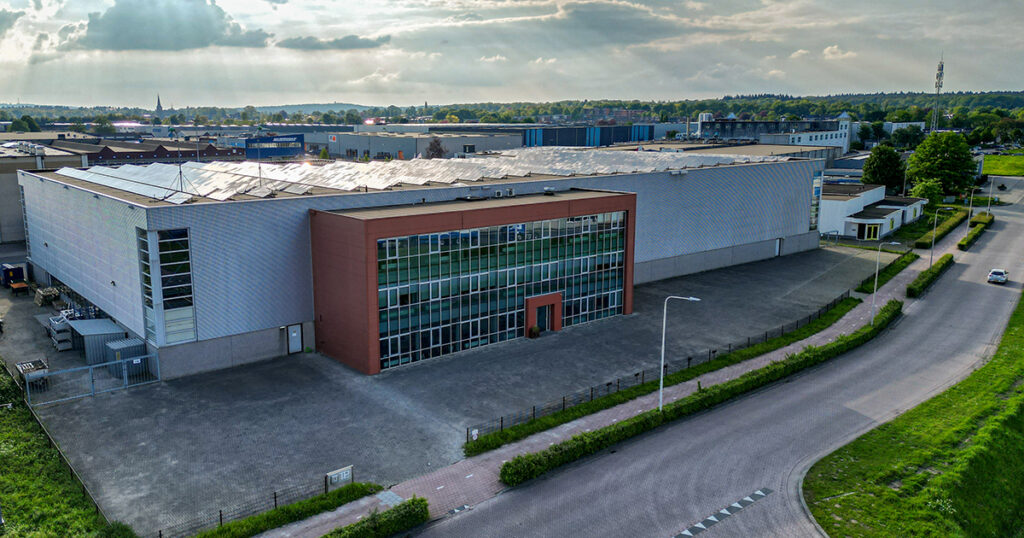
Would you like to know more about the use of food-safe cleaning paper within your hygiene and PPE policy? Our PPE specialists are happy to help. Feel free to contact us at info@safetyproducts.com or call +31 (0)314 757 300.
You might also like
Elka Pro: water- and chemical-resistant protective clothing for professional cleaning
PU-coated waterproof clothing for professional cleaning Protective clothing is put to the test during professional clean...

Complaints caused by safety footwear: causes and solutions
Recognise the signs early and find out what you can do to prevent problems From painful feet to back problems: why fit,...
Heel Spur and Heel Pain: The Role of Elten Wellmaxx
The impact of cushioning and support during prolonged standing and walking Those who spend a lot of time standing and wa...
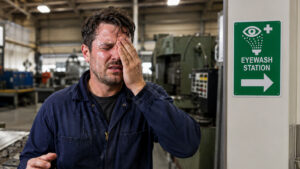
Detectaplast Eye Wash for Rapid First Aid in Workplace Incidents
From eye wash bottles and single-dose units to complete Eye Wash Stations for a range of eye hazards A speck of dust, sp...

Safety Products | Select Partner of Christeyns Food Hygiene
Professional Cleaning and Disinfection. One Complete Solution. One Partner. As a Select Partner of Christeyns Food Hygie...

PIP and Safety Products: A Partnership That Goes Beyond Products
Close collaboration, specialist expertise and support for complex PPE challenges Personal protective equipment is becomi...

Atlas FIT-DAY: Safety Footwear Starts with the Right Fit
A safety shoe only protects properly when it fits correctly For our on-site fitting service and safety footwear advice,...
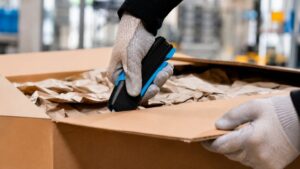
The Benefits of Martor Safety Knives
From Automatic Blade Retraction and ergonomic design to metal-detectable safety solutions Safe cutting may seem straight...

Heat stress at work: risks and solutions
Staying safe while working in extreme heat and high temperatures During hot summer days, temperatures can rise quickly i...
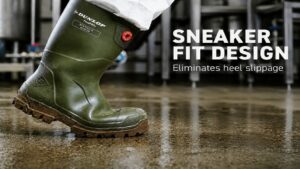
Dunlop SneakerFit: A New Generation of Safety Boots
How the fit of a safety boot affects comfort, stability and safety Traditional safety boots are known for their protecti...

Listeria in the food industry
Food-safe cleaning with rapid testing and ATP monitoring Listeria monocytogenes remains a difficult risk to control with...
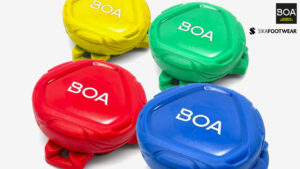
Sika Colored BOA Fit System: Colour-Coded and Replaceable
Colour-coded and modular BOA closures for Sika safety footwear In the food industry, visual identification is often an i...