How do I wear a face mask?
Correct use prevents contamination and provides protection
In sectors where hygiene and safety are crucial, such as the food industry, pharmaceutical production, healthcare institutions, and laboratories, face masks are indispensable. They help limit the spread of micro-organisms, dust, or other contaminants and therefore contribute to a controlled and safe working environment.

Why correct use is important
In sectors where hygiene and safety are crucial, including the food industry, pharmaceutical production, healthcare institutions, and laboratories, face masks are indispensable. They help limit the spread of micro-organisms, dust, or other contaminants and therefore contribute to a controlled and safe working environment.
Choosing the right type of face mask and using it correctly are essential. An incorrectly worn or incorrectly selected face mask offers insufficient protection and can increase the risk of contamination or exposure to harmful substances. This applies both to protecting employees and to safeguarding products and processes.
In this article, you will read how to wear a face mask correctly, which types of face masks exist, and when each type is suitable. We also explain how face masks fit within hygienic working according to HACCP guidelines and other relevant standards.
Important difference: face masks vs. dust masks
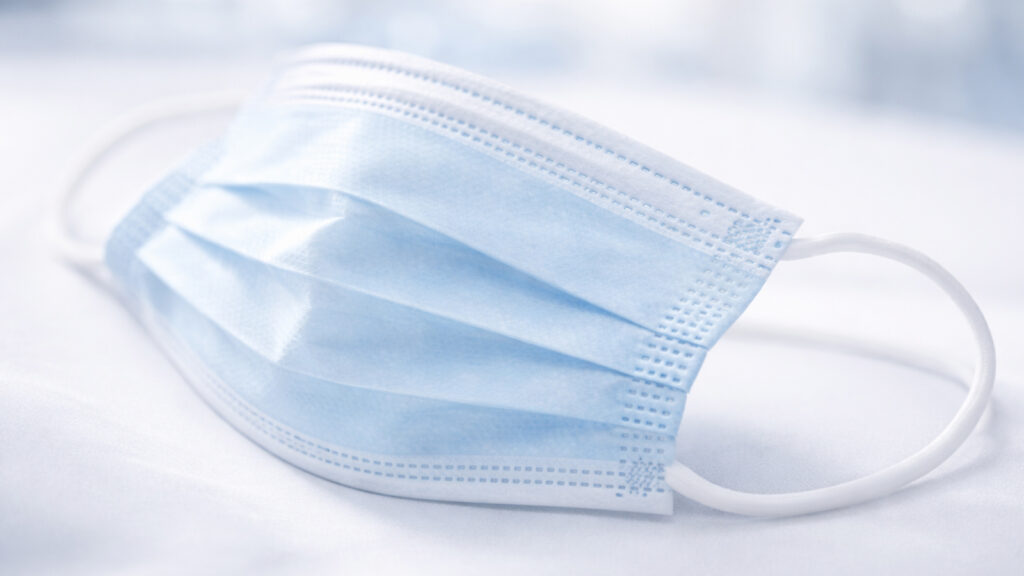
A face mask (respiratory protection), also called a mouth and nose mask, is mainly intended to limit droplets, saliva, and micro-organisms released when exhaling, talking, or sneezing, thereby protecting your environment.
A dust mask (respiratory protective equipment), or FFP mask, is intended to protect the wearer from inhaling harmful particles such as dust, aerosols, or micro-organisms. In this article, we explain both types, including when each mask is suitable.
For medical face masks, a good fit is important for comfort and hygiene, but for dust masks (FFP) a proper seal is essential for effective protection.
The importance of a good fit
A mask only works when it fits the face properly. As soon as air escapes along the edges, protection decreases. Respiratory protection is only effective when the mask fits properly and seals well against the face.
Choosing the right type of mask—from simple medical face masks to high-performance respiratory protection such as FFP2 and FFP3 masks—depends heavily on the risks in the working environment. When in doubt, always consult a PPE expert for the right advice.
Wearing a face mask or dust mask with a beard or moustache
With moustache or beard growth, achieving a good seal is difficult or impossible, especially with FFP dust masks.
A leaking seal allows air to be inhaled or exhaled along the edges and significantly reduces protection. For optimal and reliable protection, a clean-shaven face is the best solution for a proper seal.

Correct wearing of a face mask
In addition to choosing the right type of mask, correct use is also essential. Even the best face mask offers insufficient protection if it is not worn properly.
A proper fit and careful use ensure the mask works optimally and keeps you protected against harmful substances or infections. These steps follow the World Health Organization (WHO) guidance on correct mask use:
- Wash or disinfect your hands before touching the face mask.
- Place the mask over your nose, mouth, and chin. Make sure it fits completely and seals well.
- Secure the ear loops or ties firmly behind your ears or around your head.
- Press the nose clip to create a good seal.
- Avoid touching the mask while wearing it — only touch the sides or the ear loops/straps.
- Replace the mask promptly when it becomes damp, dirty, or damaged.
- Remove the mask safely by holding the ear loops/straps, without touching the front of the mask.
A proper fit and careful use significantly reduce the risk of exposure to harmful substances or microorganisms.
Different types of respiratory protection
There are various types of respiratory protection available, each with its own purpose and level of protection:
- Non-medical (community) face masks
These masks are intended for general use and are usually not certified, do not have a CE marking, and do not meet a medical standard. They offer limited effectiveness and are not suitable for professional environments with hygiene or safety requirements.
- Medical face masks (EN 14683)
Medical face masks are designed for healthcare and laboratory environments and primarily help reduce the spread of droplets into the surrounding environment. They are available in:
Type I
Type II
Type IIR (splash-resistant)
- Dust masks / FFP masks (EN 149)
FFP masks are certified respiratory protective equipment and protect the wearer against inhaling particles. They are available in:
FFP1 (basic protection)
FFP2 (higher filtration, widely used)
FFP3 (highest filtration)
- Reusable respiratory protection
For longer-term or more demanding use, there are reusable masks with replaceable filters, such as half-face and full-face masks or powered air-purifying respirator systems (PAPR).
Correctly wearing a dust mask (FFP)
An FFP dust mask must fit properly to provide effective protection. Keep the following in mind:
- Check whether the mask is suitable for your application and has the correct FFP class.
- Place the mask over your nose and chin and make sure it fits tightly.
- Shape the nose clip to minimise air leakage around the edges.
- If possible, perform a seal check: breathe in and out forcefully and check for leaks around the edges.
- Replace the mask if it becomes damp, dirty, or damaged, or if breathing becomes more difficult.
Cleaning and replacement
After use, proper cleaning or replacement of the mask is important. Disposable masks are intended for single use only. Clean and disinfect reusable masks according to the manufacturer’s guidelines. Also regularly check the condition of the filters and replace them in time to maintain the level of protection.
Service life
Disposable face masks are intended for temporary use and must be replaced when they become damp, dirty, or damaged. As a rule of thumb: do not wear a disposable face mask for more than 3 hours at a time. For dust masks, the service life depends on the working conditions (dust concentration, moisture, breathing intensity, and fit).
When to use a face mask, and when a dust mask (FFP)?
Medical face masks are mainly intended to protect the environment from droplets when exhaling. Dust masks (FFP) are respiratory protective equipment and protect the wearer from inhaling harmful particles. Which protection is needed depends on the risk assessment and workplace health and safety requirements.
Practical advice: always choose the right type of mask based on the tasks, hazards, existing risks, and the applicable hygiene and safety guidelines at the location where you will be wearing your respiratory protection.
Popular face masks and dust masks
Protection in the workplace
At an organisational level, respiratory protection also plays an important role. In many work environments where exposure to harmful substances, dust, or vapours may occur, the use of certified personal protective equipment is required. This applies to industries such as manufacturing, construction, healthcare, and laboratories.
Using additional PPE—such as safety goggles, face protection, or disposable coveralls—can further improve safety.
Face masks as part of hygienic working practices
Employees in food production environments often combine face masks with hairnets, beard covers, and other hygiene products. Together, these PPE items help prevent cross-contamination and support compliance with hygiene requirements within HACCP and BRCGS systems.

Advice from a PPE expert
Want to be sure you’re using the right respiratory protection in your work environment? Our PPE specialists are happy to help you choose and use the right face masks and dust masks (FFP), tailored to your risks and working conditions.
Contact us via info@safetyproducts.com or call +31 (0)314 757 300.
You might also like

EN 14404:2024 updated standard for knee protection
What does this mean in practice? In many professions, knee protection is essential, especially where prolonged kneeling...

New rules for allergen labelling from January 2026
Allergen warnings must be better substantiated From 1 January 2026, new rules for allergen labelling will come into forc...

Allergen Management in the Food Industry
Managing allergens in daily food production Allergens are a distinct risk within food safety. Unlike microbial risks, ev...

FSSC 22000 Certification
The globally recognised standard for food safety management FSSC 22000 (Food Safety System Certification) supports organ...
Detectable versus Non-Detectable
Why are detectable products relevant in production environments? On a production line, a broken pen or a lost plaster ca...

African Swine Fever (ASF): Reducing the Risk of Infection
The Human Factor Makes Farms Vulnerable – Hygiene and PPE Are Critical for Prevention African Swine Fever (ASF) contin...

Avian Influenza H5N1: Risks, Prevention and PPE
Practical Hygiene and PPE Measures for Work Involving Poultry Avian influenza, including the H5N1 virus, is a recurring...

IFS Food: International Standard for Food Safety
IFS Food and the Requirement for Waterproof Plasters IFS Food is one of the most widely recognized food safety standards...

Nitrile gloves – food grade
High-quality disposable nitrile gloves Disposable blue nitrile gloves are nowadays the standard in the food industry, th...
Colour coding for food safety in the food industry
Prevent cross-contamination with clear colour zones Colour coding in the food industry is a simple principle with substa...

Why Blue Is Commonly Used in Food Production Environments
Visibility and Detectability of Blue Products in Food Processing In food production, colour is not a design choice. It s...

Safe Use of Disposables and PPE in the Cheese Industry
Essential Guidelines for Hygiene and Food Safety in Cheese Production Cheese production takes place in an environment wh...