New rules for allergen labelling from January 2026
Allergen warnings must be better substantiated
From 1 January 2026, new rules for allergen labelling will come into force in the Netherlands. The NVWA will start actively checking whether allergen warnings on labels are actually justified.
There will also be more focus on preventing cross-contamination as part of allergen management. The emphasis will mainly be on the hospitality sector and smaller food producers, such as bakeries and butcheries.
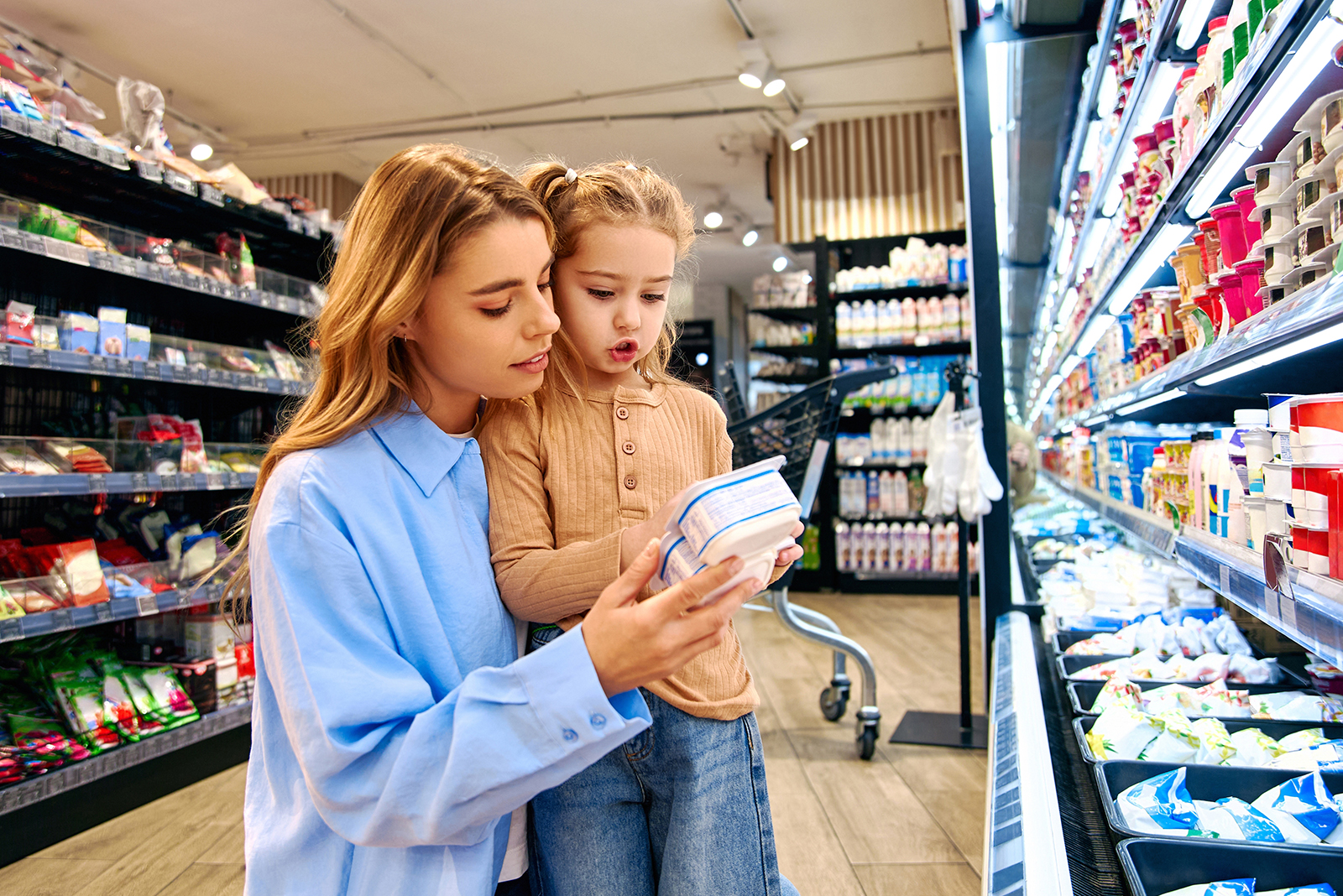
Allergens and cross-contamination
Allergens are proteins found in certain foods that can trigger allergic reactions in some people. Well-known examples include cereals containing gluten, milk, eggs, nuts and peanuts. Even very small amounts can trigger an allergic reaction. So, it’s not just about whether allergens are present, but also about any residual traces.
Cross-contamination is a major risk: an allergen can unintentionally end up in a product that should not contain it and is therefore not listed on the label. Allergen management is therefore an indispensable and essential part of food safety.
What is changing in practice?
The new rules mainly concern the use of allergen warnings on labels. This is known as precautionary allergen labelling (PAL). In practice, this comes down to three questions: when can you use a warning, how do you substantiate it, and which thresholds apply?
A warning such as ‘may contain traces of…’ can no longer be used as a default. Only the following statements are permitted: ‘May contain, for example, peanuts’ or ‘Not suitable for people with a peanut allergy’. You also can’t use precautionary allergen warnings without proper substantiation anymore.
You can only include a warning if a risk assessment shows that cross-contamination cannot be completely ruled out. This also applies when relevant threshold values may be exceeded despite the control measures in place. If the risk remains below those thresholds, no warning may be included on the label.
Product changeovers and shared production lines
These rules are particularly relevant in production processes involving multiple ingredients and product streams. In these situations, allergens can easily be carried over into other products via machinery, pipework or shared equipment.
This can occur, for example, during product changeovers, combined production runs or when different recipes are processed in the same area. In these cases, you need to be able to clearly show whether an allergen warning on the label is justified.
The rules apply to prepacked products. Products manufactured before 2026 may still be sold with the existing label until stock is exhausted.
Popular allergen tests
Assessment and substantiation
NVWA inspections of allergen warnings will place greater emphasis on substantiation. Companies must be able to demonstrate how they assess the risk of cross-contamination and why a warning is or is not included on the label.
In most cases, this is done through a risk assessment. Production processes, cleaning procedures and product changeovers all play an important role. A risk assessment is not only about the presence of allergens, but also about whether relevant threshold levels may be exceeded.
These threshold levels are based on new scientific insights, such as the so-called ED05 reference doses. These indicate the amount of an allergen that can pose a risk to people with an allergy.
Many companies also use reliable verification methods, such as rapid allergen tests or swabs. These make it quick and easy to check whether cleaning has been effective and whether allergen residues have actually been removed. Production can then resume immediately.
Practical examples
In practice, allergen incidents are often caused by labelling errors. For example, a company withdrew a batch of confectionery from the market because the product contained allergens that were not declared on the label. These included hazelnuts, soya and lactose.
Another example is a wine in which the allergen sulphite was not indicated on the label. This resulted in a product recall to prevent consumers with an allergy from consuming the product and being exposed to potential health risks.
Why these rules?
These measures are meant to reduce the unnecessary use of allergen warnings. This makes it clearer for people with allergies when a warning is genuinely needed, helping them to make safer choices.
More information from the NVWA
More information and practical examples can be found in the document Questions and answers on allergen policy (2025).

Advice from a PPE Specialist
Want to know how to apply allergen management in practice within your hygiene policy? Our specialists advise companies in the food industry, catering and logistics daily.
Feel free to contact us via info@safetyproducts.com or call +31 (0)314 757 300.
You might also like

EN 14404:2024 updated standard for knee protection
What does this mean in practice? In many professions, knee protection is essential, especially where prolonged kneeling...

Allergen Management in the Food Industry
Managing allergens in daily food production Allergens are a distinct risk within food safety. Unlike microbial risks, ev...

FSSC 22000 Certification
The globally recognised standard for food safety management FSSC 22000 (Food Safety System Certification) supports organ...
Detectable versus Non-Detectable
Why are detectable products relevant in production environments? On a production line, a broken pen or a lost plaster ca...

African Swine Fever (ASF): Reducing the Risk of Infection
The Human Factor Makes Farms Vulnerable – Hygiene and PPE Are Critical for Prevention African Swine Fever (ASF) contin...
Avian Influenza H5N1: Risks, Prevention and PPE
Practical Hygiene and PPE Measures for Work Involving Poultry Avian influenza, including the H5N1 virus, is a recurring...

ISO 22000: the standard for food safety
International food safety management from raw material to distribution ISO 22000 is a globally recognized standard for f...

IFS Food: International Standard for Food Safety
IFS Food and the Requirement for Waterproof Plasters IFS Food is one of the most widely recognized food safety standards...
Nitrile gloves – food grade
High-quality disposable nitrile gloves Disposable blue nitrile gloves are nowadays the standard in the food industry, th...

Colour coding for food safety in the food industry
Prevent cross-contamination with clear colour zones Colour coding in the food industry is a simple principle with substa...
Why Blue Is Commonly Used in Food Production Environments
Visibility and Detectability of Blue Products in Food Processing In food production, colour is not a design choice. It s...

Safe Use of Disposables and PPE in the Cheese Industry
Essential Guidelines for Hygiene and Food Safety in Cheese Production Cheese production takes place in an environment wh...