Prescription safety glasses and prescription computer glasses
Employer responsibilities for eye protection and vision correction
From production facilities and laboratories to warehouses and engineering workshops, eye protection remains a routine safety requirement. At the same time, employees are spending more time working with screens than ever before. This combination is increasing demand for both prescription safety glasses and prescription computer glasses.
Choosing the right eyewear is not only a practical issue. Employers also need to consider workplace safety requirements and employee wellbeing. Not every type of eyewear falls under the same requirements. This distinction often creates confusion, particularly where eye protection needs overlap with intensive display screen work.
When must an employer provide safety glasses?
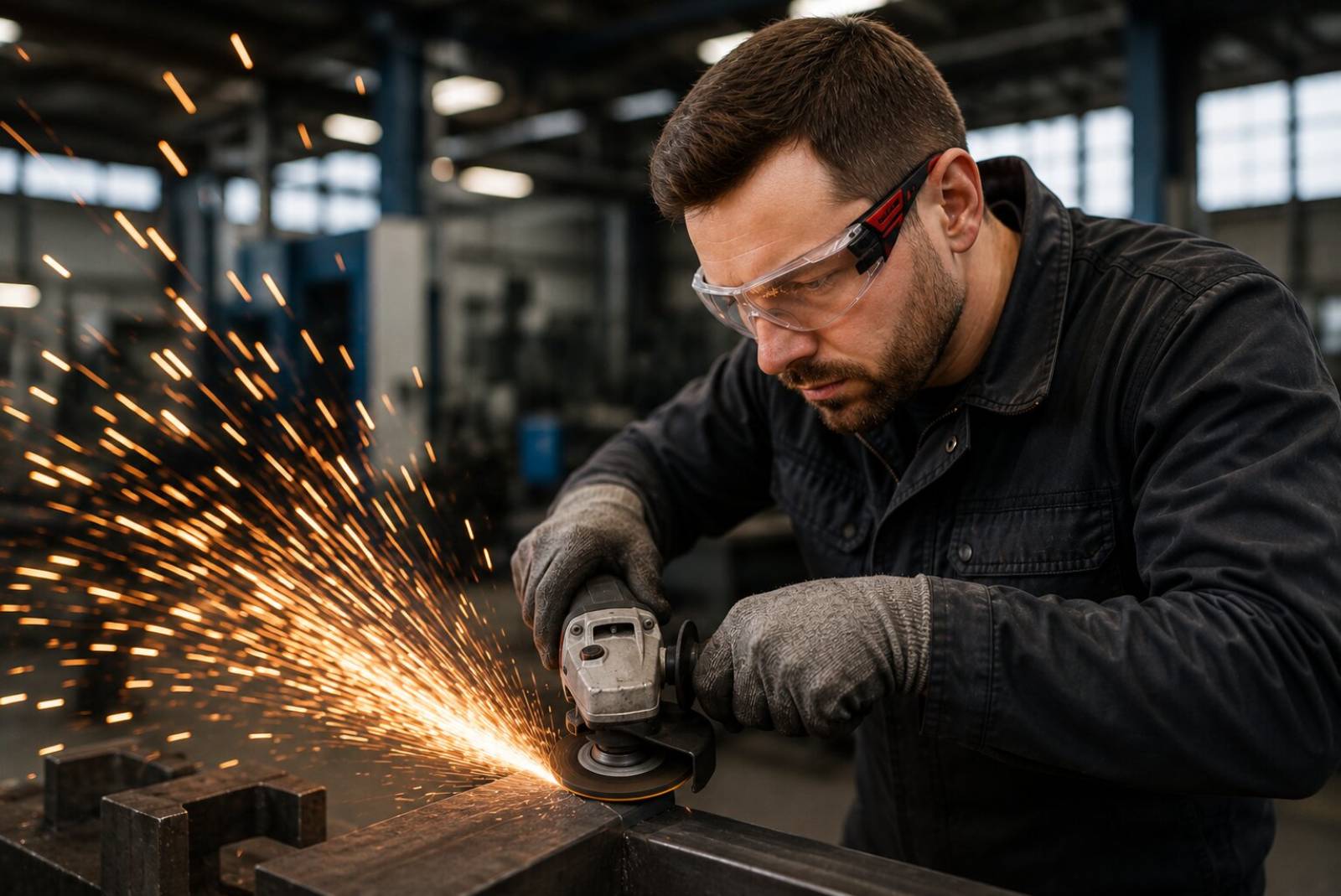
Under European regulations, safety glasses are classified as personal protective equipment (PPE). In working environments where there is a risk of eye injury, employers are required to provide appropriate eye protection. This may include activities involving flying particles, dust, splinters, chemical substances or mechanical impact.
This obligation extends beyond an employer’s general duty of care. Occupational health and safety regulations require PPE to be provided whenever risks cannot be adequately eliminated through other control measures. As a result, eye protection forms part of standard safety procedures in many industrial workplaces.
For employees who wear prescription glasses, the key question is whether standard safety glasses provide sufficient protection or whether prescription safety eyewear is required.
Wearing standard safety glasses over personal spectacles is often impractical and may not provide an adequate level of protection. This is particularly true where eye protection must be worn for extended periods or where clear vision is essential for carrying out tasks safely and effectively. In such situations, prescription safety glasses are often the preferred solution.
Corrective safety glasses: models and frame options
Choosing prescription safety glasses involves more than selecting a frame. Lens prescription, workplace hazards, wearing comfort and compatibility with other PPE all play a role.
In many cases, the process is managed through an optician. Employees will usually try several frame models before choosing one that fits comfortably alongside hearing protection or other PPE.
Some organisations also use online solutions that allow employees to select a frame and complete certain measurements digitally. For organisations with multiple sites, coordinating eye tests can be more challenging than selecting the glasses themselves. Managing appointments, measurements and distribution across different locations often requires a structured process.
Bollé Safety offers several options for prescription safety eyewear. These include fitting through a participating optician (In-Store Vision), a fully digital process (Seamless Vision), or on-site eye examinations for multiple employees at the same location (On-Site Vision).
The range includes several models suitable for prescription lenses. Popular options such as the B808 and CONTPSI Contour are available through the webshop, while additional models can be supplied on request through Safety Products.
Safety glasses versus computer glasses
Computer glasses are not classified as personal protective equipment (PPE). Instead, they fall under workplace health and safety requirements relating to display screen equipment (DSE) use. In many jurisdictions, employees who regularly work with display screens are entitled to an eye examination. Where that assessment shows that specialised eyewear is required specifically for display screen work, employers are often required to provide or reimburse the necessary computer glasses.
The requirement applies to eyewear needed for display screen work. Ordinary reading glasses or personal prescription glasses do not automatically qualify. Employees who spend long periods working in front of screens on a daily basis are most likely to benefit from computer glasses.
In office environments, the focus is usually on comfortable and healthy screen use. In technical roles, the situation is often more complex. Employees frequently switch between computer screens, machinery and assembly tasks. Examples include machine operators, laboratory technicians, engineers and maintenance technicians. In these situations, a specific prescription may be required for intermediate viewing distances, such as when working with monitors, control panels or measuring equipment.
Why wearing comfort matters
Safety spectacles with prescription lenses combine corrective lenses with certified eye protection in accordance with EN 166. During audits and workplace inspections, increasing attention is being paid to wearing comfort and practical usability. In particular, in warm production environments or during shift work, fogging lenses and poor fit can cause frustration and discomfort. Employees who struggle with fogging lenses or poor fit are far less likely to wear their safety glasses throughout a shift.
For this reason, prescription safety glasses are often included as part of a broader PPE strategy within many organisations. Most safety managers already know the reality: if a pair of safety glasses is uncomfortable, employees will find reasons not to wear it.
Employees often notice fit issues only after wearing safety glasses for a full shift, especially when they are also using hearing protection.
Prescription computer glasses in practice
Prescription computer glasses are designed for viewing distances ranging from around 35 centimetres to several metres. This type of lens, often referred to as an occupational or degressive lens, is optimised for short to intermediate viewing distances, such as those encountered during display screen work. Standard multifocal glasses are generally designed to provide a broader range of vision for everyday use.
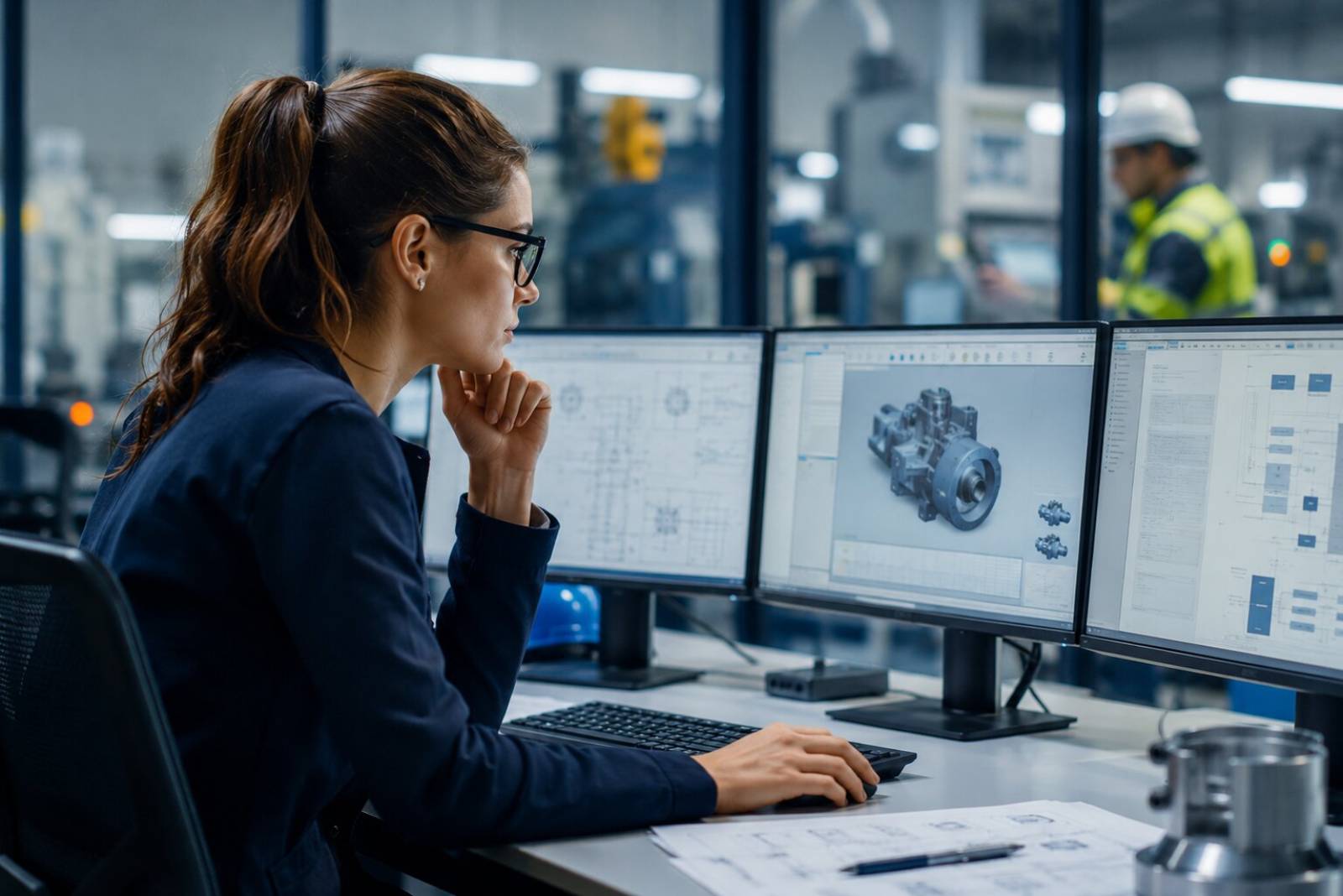
Control room operators, engineers and laboratory staff often spend hours switching between screens, instruments and paperwork. Standard multifocal lenses are not always designed for those viewing distances.
This is particularly common among employees who wear multifocal glasses. A common complaint is having to tilt the head backwards to view a monitor clearly through the reading section of a multifocal lens.
Employers are not necessarily required to fully reimburse any eyewear an employee may prefer. Not all employers follow the same approach. Reimbursement levels, eligibility criteria and approval processes can vary between organisations. In many organisations, the process begins with identifying employees who regularly carry out display screen work, followed by an eye examination and professional advice provided by an optician or occupational health service.
Eye protection in risk assessments and compliance audits
Before selecting safety eyewear, most organisations first assess the eye hazards present in the workplace. This may include standard safety glasses, prescription protective eyewear, specialised lens coatings or specific lens materials, depending on the nature of the risks involved.
Employees are increasingly moving between machinery, production lines and computer screens throughout the day. That’s why eye protection and vision correction are often considered together rather than as separate issues. The exact approach varies according to the industry, risk profile and type of work being carried out.
Providing prescription safety glasses often involves more than simply ordering a pair of glasses. Larger organisations in particular frequently look for practical and scalable ways to manage eye examinations, frame selection and eyewear distribution for multiple employees across different departments or locations.
Safety glasses in combination with other PPE
In manufacturing, logistics and industrial environments, eye protection is rarely used in isolation. Safety glasses are typically worn alongside other forms of personal protective equipment (PPE) and workplace hygiene measures.
This is often the case when employees are also required to wear hair nets, hearing protection, face protection, protective gloves or protective clothing. In these situations, it quickly becomes apparent how important comfort and compatibility with other PPE are.
Tijdens het dagelijks gebruik gaat het ook om reiniging en onderhoud. Vooral als stof, vetten of condens invloed hebben op het zicht.
Ordering safety eyewear from Bollé Safety
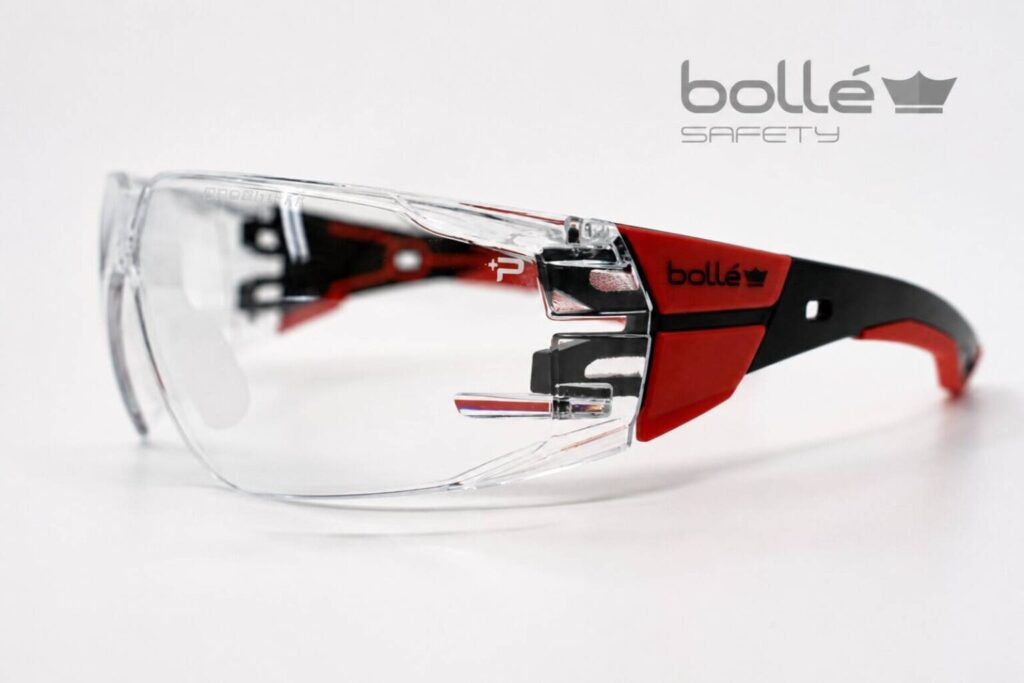
A range of solutions is available for organisations that require prescription safety glasses. Bollé Safety offers certified eye protection compliant with EN 166, including prescription safety eyewear designed for use in manufacturing, logistics, engineering, laboratories and other industrial environments.
The glasses are available with a variety of lens materials, coatings and prescription options to suit different tasks and working conditions. In addition, services such as On-Site Vision, In-Store Vision and Seamless Vision provide flexible solutions for eye examinations, eyewear fitting and distribution within organisations.

Advice from a specialist
Prescription safety eyewear and computer glasses often require a tailored approach, particularly when employees perform a variety of tasks or rely on corrective lenses to carry out their work safely and effectively.
Whether you need prescription safety glasses for one employee or hundreds across multiple locations, choosing the right frames, lenses and measurement process can save considerable time and administration.
For advice or further information, please contact us at info@safetyproducts.com or call +31 (0)314 757 300.
Is an employer required to pay for prescription safety glasses?
Yes, where eye protection is necessary for employees to perform their work safely and corrective lenses are required. Corrective safety glasses are classified as personal protective equipment (PPE). If employees cannot perform their work safely without prescription eye protection, employers will normally be expected to provide suitable safety eyewear.
When is an employee entitled to computer glasses?
Employees who regularly work with display screen equipment should have access to appropriate eye examinations. Many employers offer eye examinations for employees who spend a significant part of their working day in front of screens. If an eye examination determines that specialised computer glasses are required specifically for work-related screen use, employers may be required to provide or reimburse an appropriate solution.
What is the difference between prescription safety glasses and computer glasses?
Safety spectacles with prescription lenses are a form of PPE designed to protect the eyes against workplace hazards such as impact, dust, flying particles and chemical splashes.
Computer glasses, by contrast, are not PPE. They are designed to improve visual comfort during display screen work and optimise vision at short to intermediate viewing distances. As a result, different workplace health and safety requirements typically apply to each type of eyewear.
You might also like

Elka Pro: water- and chemical-resistant protective clothing for professional cleaning
PU-coated waterproof clothing for professional cleaning Protective clothing is put to the test during professional clean...

Complaints caused by safety footwear: causes and solutions
Recognise the signs early and find out what you can do to prevent problems From painful feet to back problems: why fit,...

Heel Spur and Heel Pain: The Role of Elten Wellmaxx
The impact of cushioning and support during prolonged standing and walking Those who spend a lot of time standing and wa...
Detectaplast Eye Wash for Rapid First Aid in Workplace Incidents
From eye wash bottles and single-dose units to complete Eye Wash Stations for a range of eye hazards A speck of dust, sp...

Safety Products | Select Partner of Christeyns Food Hygiene
Professional Cleaning and Disinfection. One Complete Solution. One Partner. As a Select Partner of Christeyns Food Hygie...
PIP and Safety Products: A Partnership That Goes Beyond Products
Close collaboration, specialist expertise and support for complex PPE challenges Personal protective equipment is becomi...

Atlas FIT-DAY: Safety Footwear Starts with the Right Fit
A safety shoe only protects properly when it fits correctly For our on-site fitting service and safety footwear advice,...

The Benefits of Martor Safety Knives
From Automatic Blade Retraction and ergonomic design to metal-detectable safety solutions Safe cutting may seem straight...

Heat stress at work: risks and solutions
Staying safe while working in extreme heat and high temperatures During hot summer days, temperatures can rise quickly i...
Dunlop SneakerFit: A New Generation of Safety Boots
How the fit of a safety boot affects comfort, stability and safety Traditional safety boots are known for their protecti...

Listeria in the food industry
Food-safe cleaning with rapid testing and ATP monitoring Listeria monocytogenes remains a difficult risk to control with...
Sika Colored BOA Fit System: Colour-Coded and Replaceable
Colour-coded and modular BOA closures for Sika safety footwear In the food industry, visual identification is often an i...