The Benefits of Martor Safety Knives
From Automatic Blade Retraction and ergonomic design to metal-detectable safety solutions
Safe cutting may seem straightforward, but accidents still happen regularly. Cut injuries remain among the most common workplace accidents in logistics, manufacturing and the food industry. For that reason, many organisations now use safety knives as part of their efforts to reduce cutting injuries.
Depending on the model, Martor safety knives can offer several practical benefits:
- Reduced risk of cutting incidents
- Automatic Blade Retraction (ABR) for enhanced safety
- Ergonomic design for intensive use
- MDP models for food and pharmaceutical environments
- Suitable for opening boxes, film and sacks
- Solutions for working with powders and granulates
But what exactly makes a safety knife different from a traditional utility knife, and what role do ergonomics, safety technology and detectability play?
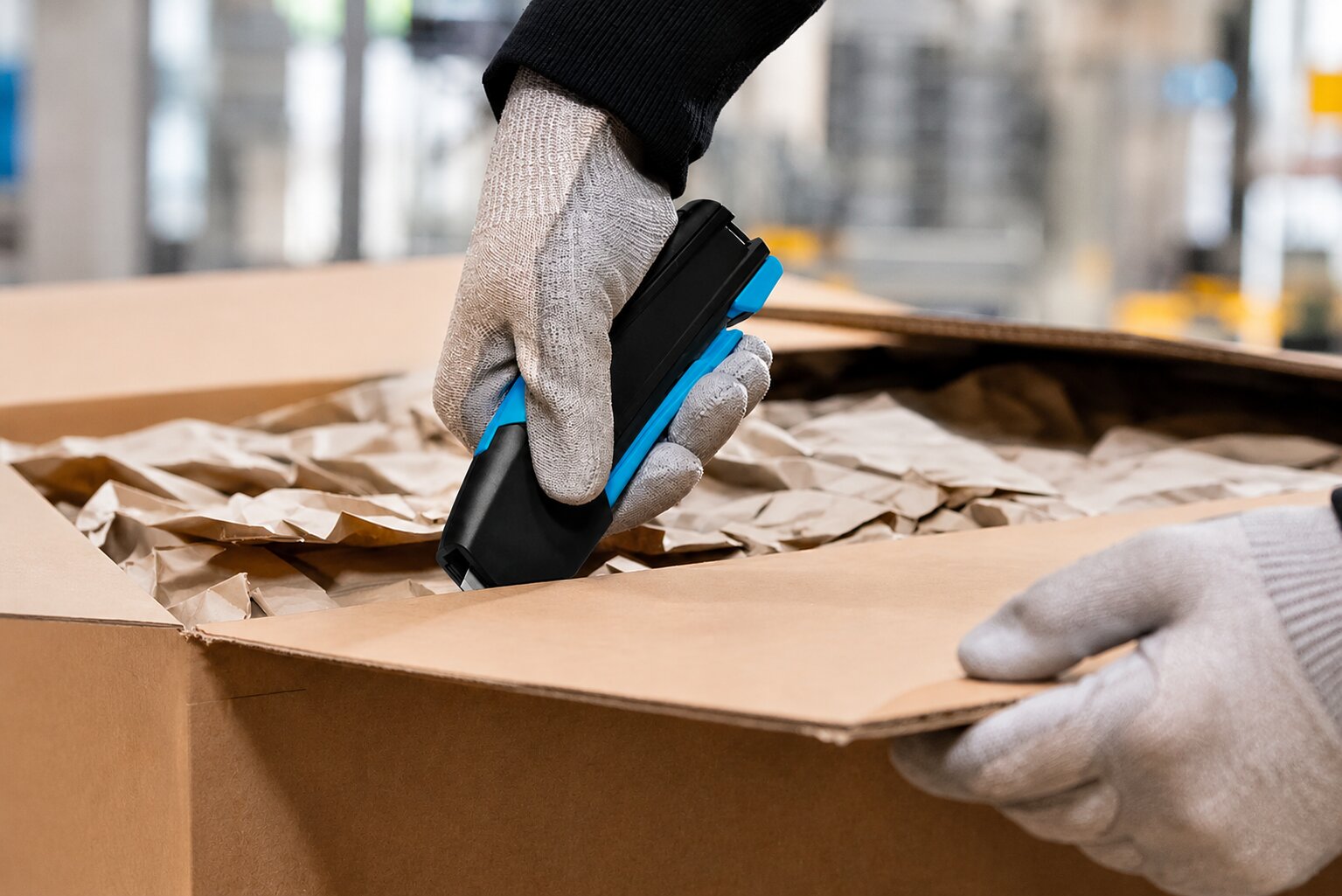
Safety knife vs traditional utility knife
At first glance, safety knives look very similar to traditional utility knives. The main difference is what happens to the blade after the cut has been made. With a standard utility knife, the blade often remains exposed after use, whereas on a safety knife the blade is automatically shielded or retracted as soon as the cutting action is completed.
This significantly reduces the risk of cut injuries if the knife slips unexpectedly or is left open after use. In environments where large numbers of boxes, film, strapping bands or sacks are opened every day, safety knives can play an important role in reducing cutting risks.
Safe opening of raw material bags and bulk packaging
Some industries handle large quantities of bags containing powders, granulates and other raw materials on a daily basis. Examples include the food industry, chemical manufacturing and pharmaceutical production.
Opening these bags often involves several risks:
- Cut injuries to hands and forearms
- Damage to the packaging, resulting in product loss
- Contamination of the contents
- Build-up of dust and dirt inside the cutting tool
- Downtime when knives no longer function properly
Especially when handling bags containing powders, flour, sugar, additives or chemical raw materials, fine dust can accumulate within the moving parts of a knife. This increases the likelihood of the mechanism becoming less effective over time.
For these types of applications, specialised safety knives have been developed to perform reliably in dusty environments and under intensive daily use. One example is the Martor Secunorm 610 XDR. This model has been specifically designed for opening bags in environments where large amounts of dust are generated. The open blade design helps prevent dust and particles from building up inside the mechanism, allowing the knife to continue operating smoothly.
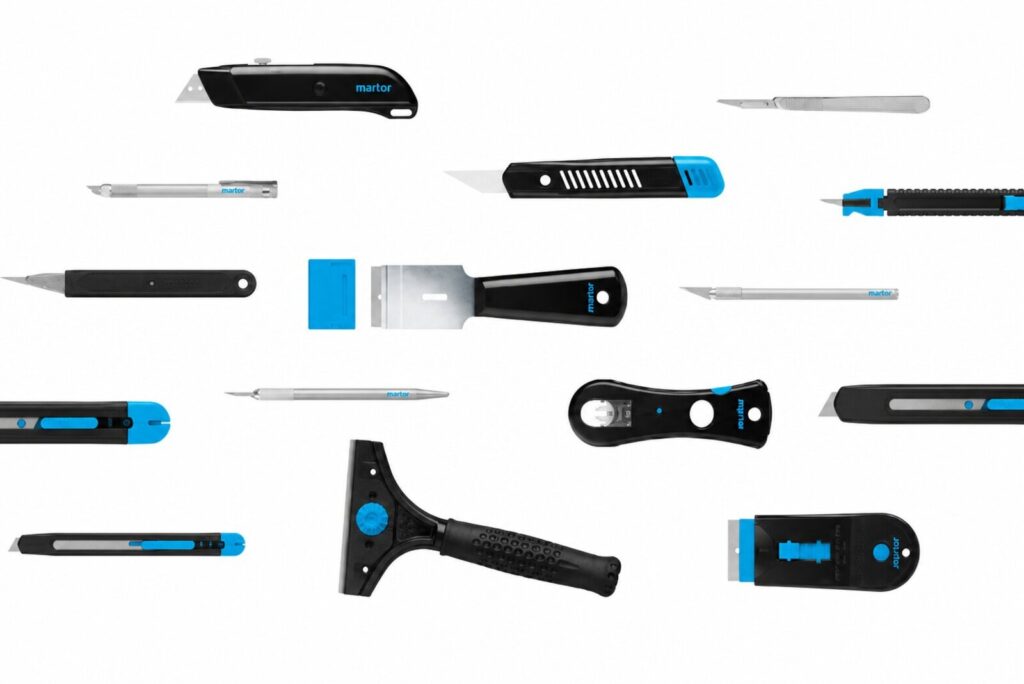
Popular Martor Safety Knives
MDP: metal-detectable safety knives
Strict food safety requirements apply within the food industry. For this reason, many companies choose MDP (Metal Detectable Plastic) products.
Plastic components contain detectable metal particles, making them easier to identify using metal detection systems. If part of a safety knife accidentally enters the production process, there is a greater chance that it will be detected before the product reaches the customer.
Some Martor models combine metal-detectable components with corrosion-resistant materials and detectable accessories. The Secunorm 610 XDR, for example, features metal-detectable plastic components. This safety knife is widely used in the food and pharmaceutical industries.
During audits, information about detectability can help demonstrate the measures taken to reduce contamination risks.
Automatic Blade Retraction (ABR)
One of Martor’s best-known safety features is Automatic Blade Retraction (ABR). The blade automatically retracts into the handle as soon as the user releases the slider or trigger.
The benefit becomes particularly clear when a knife slips unexpectedly. For example, when an employee cuts through packaging more quickly than anticipated or when the material suddenly gives way. In these situations, the risk of cut injuries is significantly lower than with a traditional retractable utility knife.
A typical example is opening cardboard boxes in a warehouse. If the blade suddenly slips through the packaging, the automatic retraction mechanism helps reduce the risk of accidental contact with the blade.
These knives are commonly used for opening boxes, film, cardboard, sacks and strapping bands in environments such as logistics, distribution and manufacturing.
Cutting in demanding environments
Not every working environment requires the same type of safety knife. In warehouses, speed and ease of use are often the priority, while in the food industry hygiene and detectability are key considerations. In chemical manufacturing environments, a knife must be able to withstand dust, dirt and intensive daily use.
In environments where large amounts of dust are generated, not all safety knives perform equally well. Fine dust can accumulate in moving parts, causing traditional knives to become less reliable over time.
Martor developed the XDR (eXtra Dirt Resistant) range for environments where dust and dirt can affect the performance of conventional safety knives. The open design helps prevent dust particles from building up around the mechanism. The knife can also be cleaned easily using compressed air, water or alcohol.
As a result, XDR safety knives are often used in:
- Food production
- Chemical manufacturing
- Pharmaceutical production
- Processing of powders and granulates
- Bag filling stations
- Recycling and waste processing facilities
Ergonomics for frequent cutting tasks
In addition to safety, ergonomics is equally important when it comes to safety knives. Employees opening packaging may perform hundreds or even thousands of cutting movements during a single working day. If a knife is uncomfortable to hold or requires excessive force, fatigue in the hand, wrist, arm and shoulder can occur more quickly.
To address this, many Martor safety knives include features such as:
- Handles designed to fit naturally in the hand
- Smooth and easy-to-operate sliders and squeeze mechanisms
- Soft-grip materials for a secure and comfortable hold
- A cutting angle designed to reduce strain on the wrist and arm
- Sharp blades that require less force during cutting
It may sound counterintuitive, but a sharp blade is often safer than a blunt one. Because less force is required, the cutting action remains easier to control and the risk of the knife slipping is reduced.
Advice from a specialist
Choosing the right safety knife depends largely on the materials being cut and the working environment. If you are unsure which model is most suitable, our specialists can help.
Contact us at info@safetyproducts.com, call +31 (0)314 757 300 or complete the contact form on our contact page. We’ll get back to you as quickly as possible.
What is the difference between a safety knife and a standard utility knife?
A safety knife features a mechanism that automatically shields or retracts the blade when it is not actively being used. This helps reduce the risk of cut injuries if a cutting action ends unexpectedly or the knife is left unattended after use.
Why are cut injuries such a common workplace accident?
Cutting is a routine task in many industries. Fatigue, distraction and using the wrong tool for the job are common causes of cutting accidents. In many cases, injuries occur during routine tasks that employees perform every day.
What does Automatic Blade Retraction mean?
Automatic Blade Retraction is a safety feature that automatically retracts the blade into the handle as soon as the user releases the slider or trigger. This means the blade is only exposed during the actual cutting action.
What does MDP mean for safety knives?
MDP stands for Metal Detectable Plastic. Plastic components contain detectable metal particles, making them easier to identify using metal detection systems in production environments.
You might also like
Elka Pro: water- and chemical-resistant protective clothing for professional cleaning
PU-coated waterproof clothing for professional cleaning Protective clothing is put to the test during professional clean...

Complaints caused by safety footwear: causes and solutions
Recognise the signs early and find out what you can do to prevent problems From painful feet to back problems: why fit,...

Heel Spur and Heel Pain: The Role of Elten Wellmaxx
The impact of cushioning and support during prolonged standing and walking Those who spend a lot of time standing and wa...

Detectaplast Eye Wash for Rapid First Aid in Workplace Incidents
From eye wash bottles and single-dose units to complete Eye Wash Stations for a range of eye hazards A speck of dust, sp...

Safety Products | Select Partner of Christeyns Food Hygiene
Professional Cleaning and Disinfection. One Complete Solution. One Partner. As a Select Partner of Christeyns Food Hygie...

PIP and Safety Products: A Partnership That Goes Beyond Products
Close collaboration, specialist expertise and support for complex PPE challenges Personal protective equipment is becomi...
Atlas FIT-DAY: Safety Footwear Starts with the Right Fit
A safety shoe only protects properly when it fits correctly For our on-site fitting service and safety footwear advice,...

Heat stress at work: risks and solutions
Staying safe while working in extreme heat and high temperatures During hot summer days, temperatures can rise quickly i...
Dunlop SneakerFit: A New Generation of Safety Boots
How the fit of a safety boot affects comfort, stability and safety Traditional safety boots are known for their protecti...

Listeria in the food industry
Food-safe cleaning with rapid testing and ATP monitoring Listeria monocytogenes remains a difficult risk to control with...
Sika Colored BOA Fit System: Colour-Coded and Replaceable
Colour-coded and modular BOA closures for Sika safety footwear In the food industry, visual identification is often an i...
BOA Fit System: the smart innovation behind modern Safety Footwear
A smart combination of comfort, safety and convenience for every working day The BOA closure has firmly established itse...